
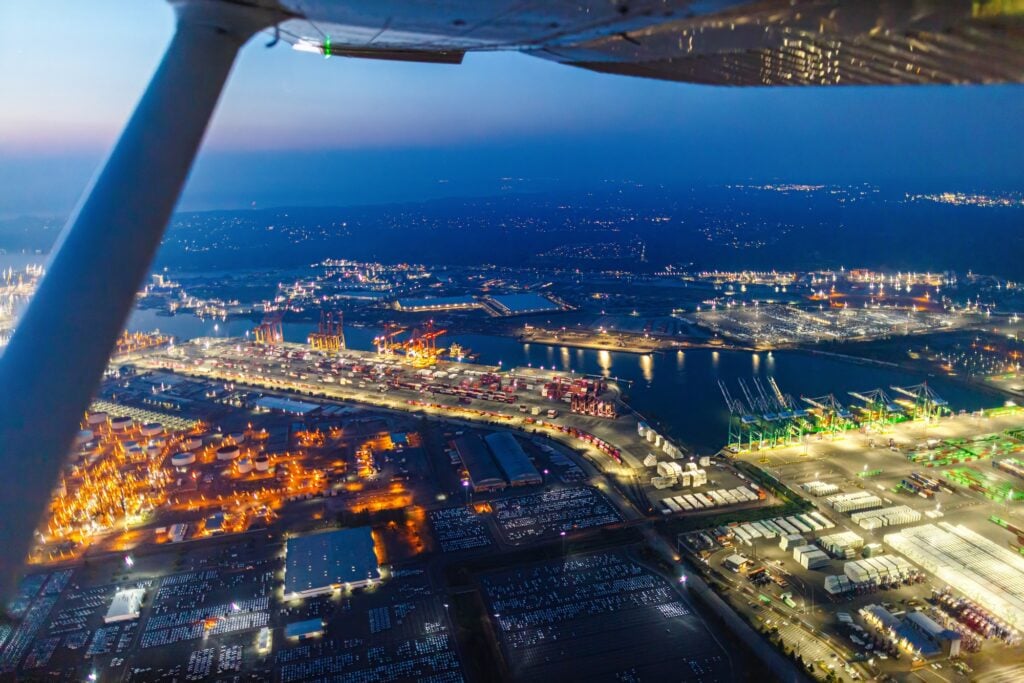
The night air over the Puget Sound is an inking-black abyss, a vast, unlit void where millions of lives tick away beneath a fractured skin of headlights and quiet suburban roofs. Down there, on the asphalt arteries of I-5, drivers operate within the claustrophobic confines of their own windshields, slaves to the immediate ten yards before their bumpers.
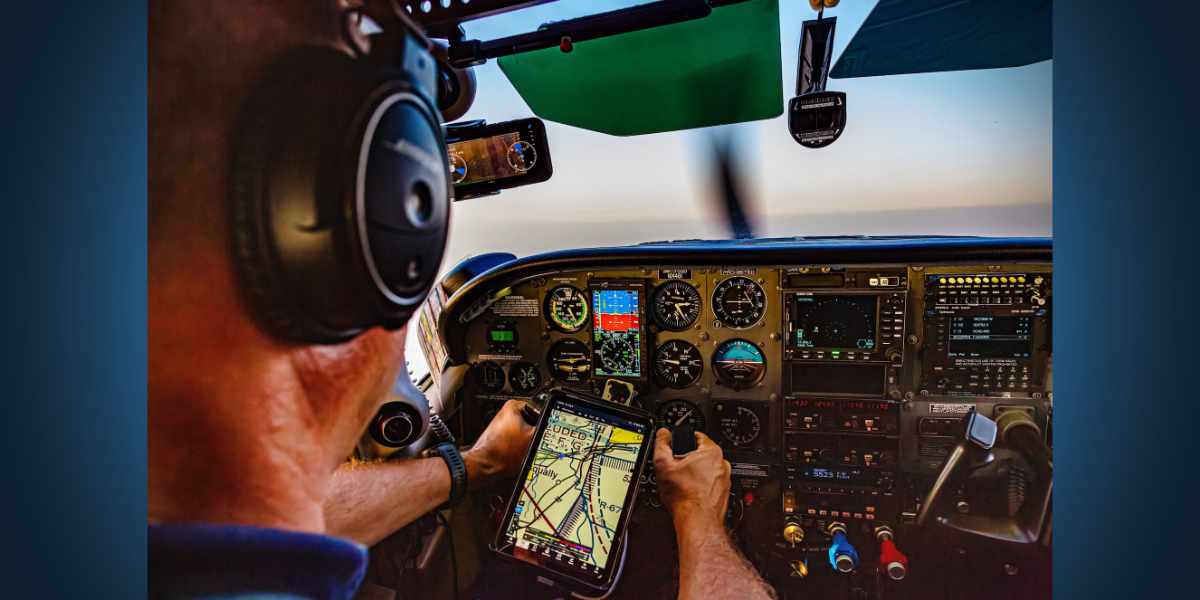
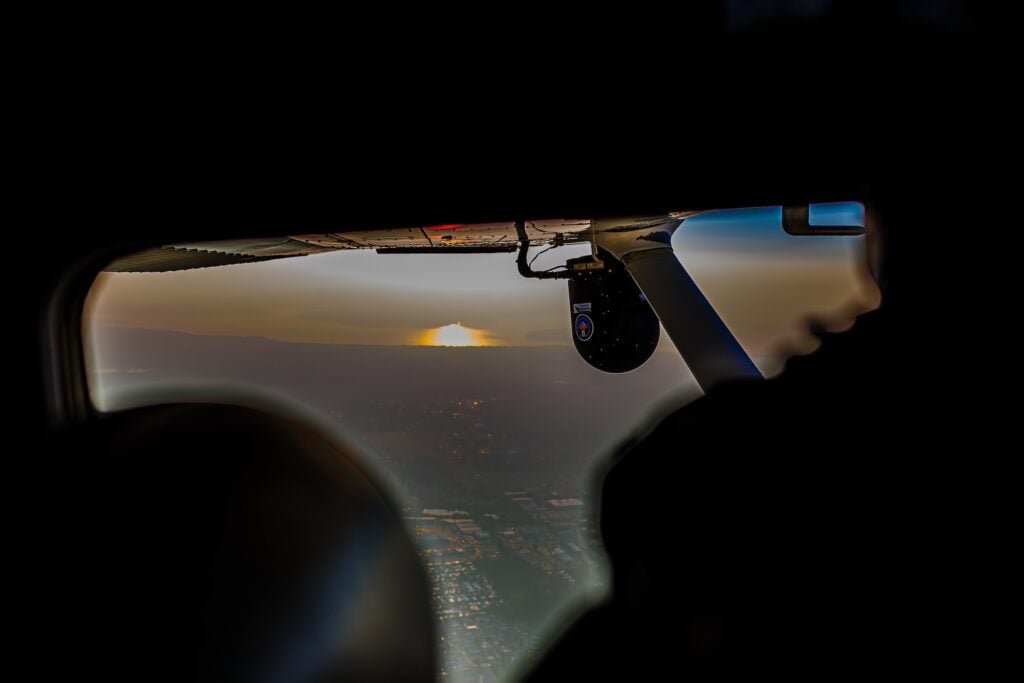
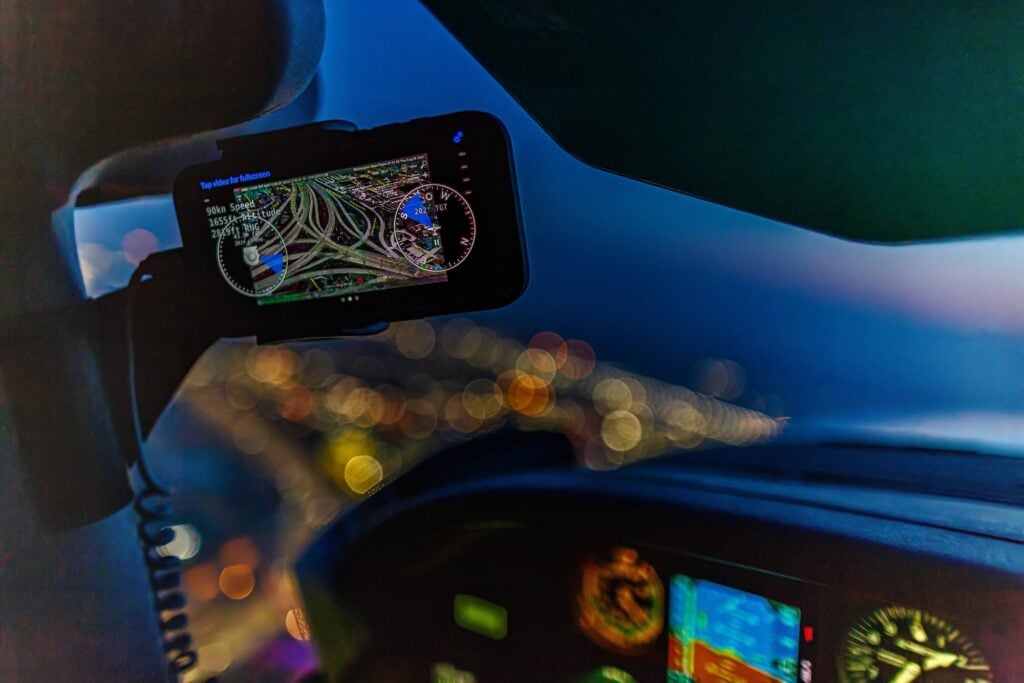
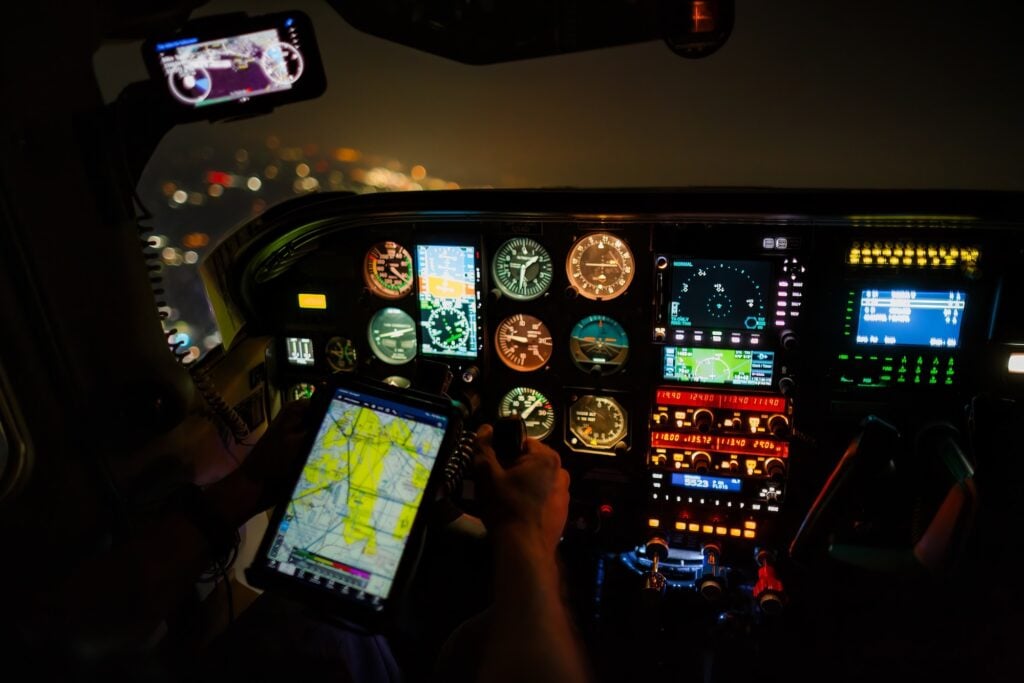
But 3,000 feet straight up, suspended in the vibration-heavy cabin of a Cessna 206 Stationair, the world rights itself into something entirely different. It ceases to be a chaotic tangle of commutes and commerce and transforms into a living, breathing tactical grid—a high-stakes theater played out in real-time thermal gradients.
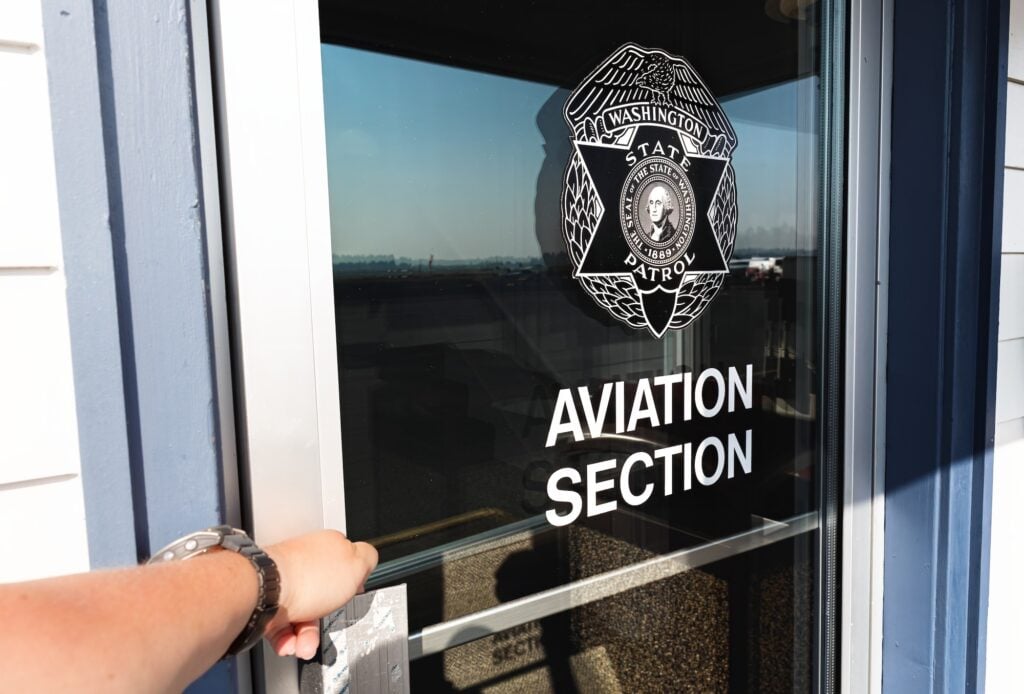
For the men and women of the Washington State Patrol Aviation Section, this is where the ground rules of modern law enforcement are radically rewritten. Armed with multi-million-dollar Forward-Looking Infrared (FLIR) optics and decades of hard-earned tactical intuition, these airborne troopers operate as the invisible architects of highway safety. They take the pitch-black chaos of the Pacific Northwest night and render it into absolute, unsparing clarity.
Chapter I: From Asphalt to Airspace:
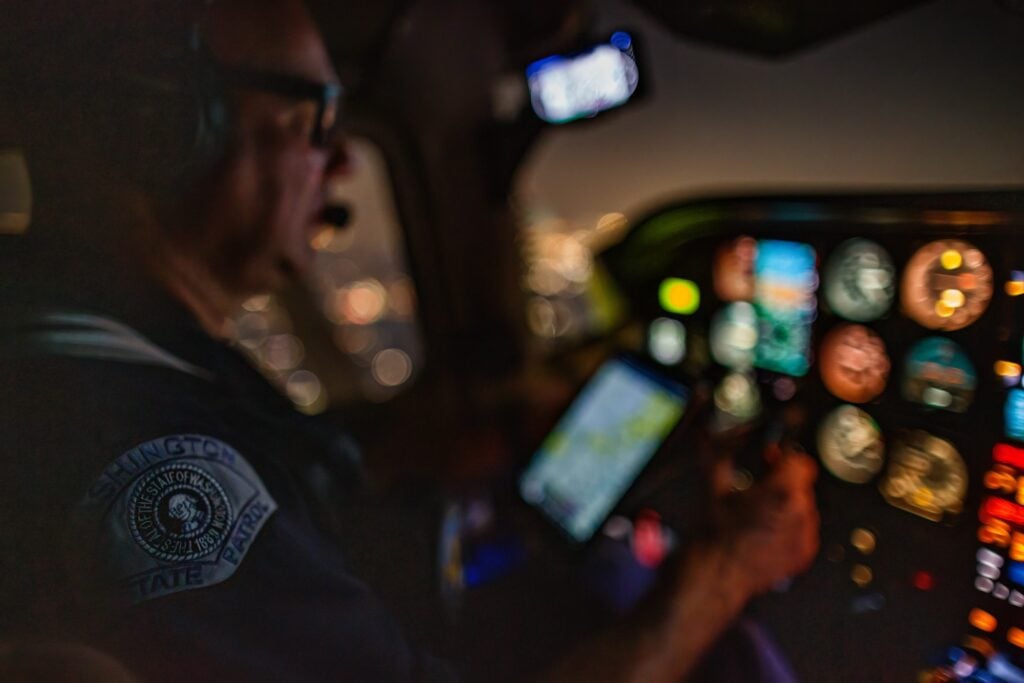
To understand the machinery of the sky, you have to trace it back to the grit of the ground. Veterans like Officer Bart Maupin carry the weight of that transition in their posture. With twenty-six years inside the Washington State Patrol—the last five anchored firmly in the aviation division—Maupin’s career is a study in institutional evolution.
“I came in with my private pilot license, and then went through extensive instrument-rated commercial pilot training,” Maupin explains, spelling his last name with the practiced cadence of a veteran who has spent thousands of hours talking to judges, dispatchers, and grand juries.
For an ordinary trooper staring out from the driver’s seat of a marked cruiser, the path to the left seat of a Cessna is a grueling gauntlet. It relies entirely on internal job postings opening up like narrow windows in a storm. While some select aviators are pulled raw from the ranks with zero prior flight experience and trained completely from scratch under agency auspices, those who arrive with private licenses still face a punishing four-year progression before they are stamped mission-ready.
The psychological shift is absolute. When you trade the patrol cruiser for the cockpit, your relationship with speed and space is permanently altered.
“You give the units on the ground an overall aerial view of what’s going on,” Maupin says, his eyes scanning the horizon line where the faint amber glow of Seattle bleeds into the lower atmosphere. “We can look ahead of where they’re heading, where they’ve been, traffic conditions, and driving behavior. You get a much more comprehensive view of how somebody is driving rather than just a momentary glimpse of them speeding.”
Chapter II: The Thermal World and the Tactical Flight Officer:
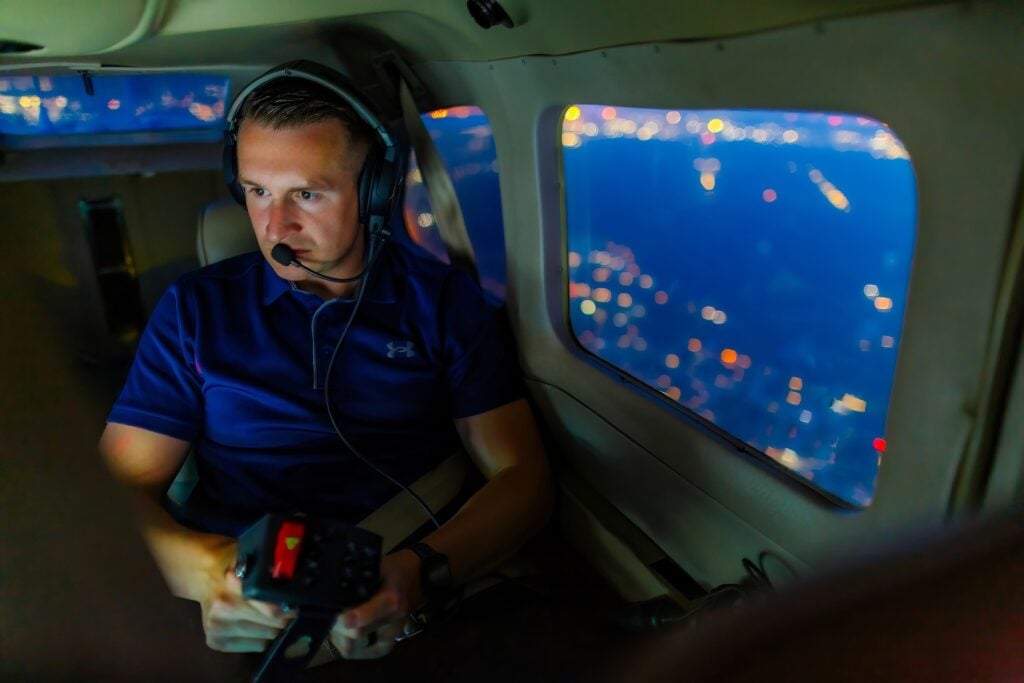
Tucked away in the back cabin directly behind the flight deck sits the Tactical Flight Officer (TFO), a role currently defined by officers like Nick Jones. If the pilot is the captain of the vessel, the TFO in the rear is the cartographer of the invisible. Staring into a high-definition thermal monitor for hours on end, Jones experiences the mission through a lens that feels eerily detached from reality.
“The FLIR works so that anything hot will show up,” Jones notes, his hands hovering over the control array. “It’s a lot easier at night when the ground is cool and you’re tracking a person or vehicle that’s warmer than the pavement.”
Scanning miles of dark, folded highway requires a disciplined, exhausting cognitive split—a rigid 50-50 allocation between scouring the physical windowpane for traffic markers and staring down into the glowing monochrome of the monitor. Spotting a driver running triple-digit speeds or carving recklessly through midnight traffic isn’t about reading license plates; it’s about recognizing kinetic anomalies, micro-signatures of erratic acceleration, and sudden deviations in the smooth, predictable flow of commuter data streams.
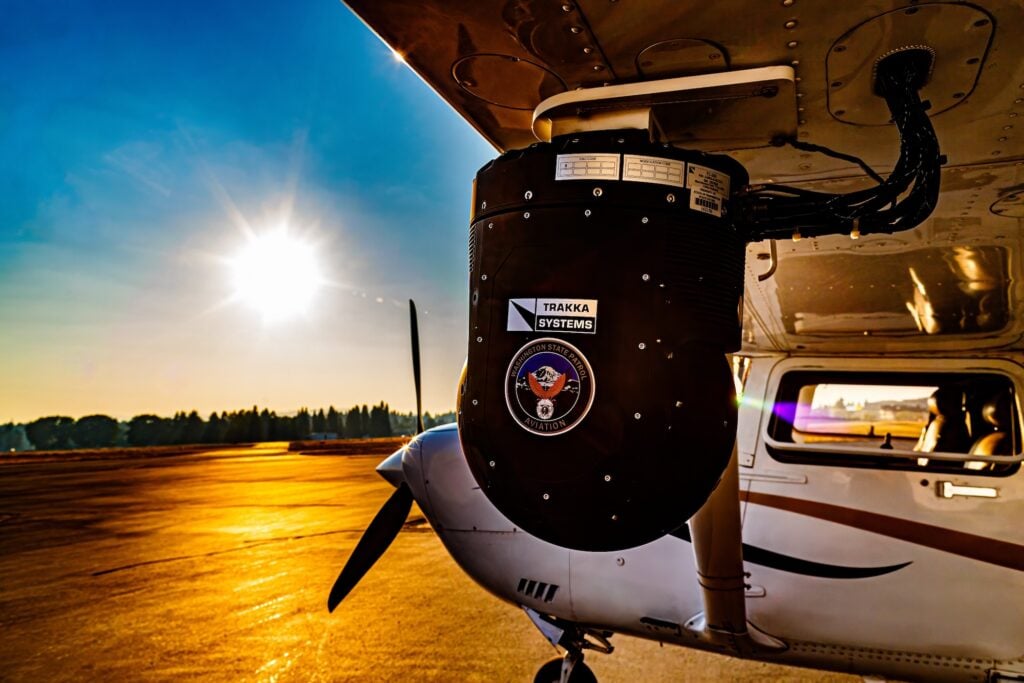
Yet, this high-tech panopticon exacts a physical toll. The gyro-stabilized multi-spectral imaging system slung beneath the aircraft’s left wing—utilizing advanced Trakka Systems EO/IR optical hardware—weighs roughly forty pounds. This complex mechanical eye is tethered to advanced recording architecture like the Ion recorder, which features multi-level SD card loops and secure backup feeds managed live by the TFO from the back seat.
Mastering the one-handed joystick controller requires an almost athletic dexterity. While legacy thermal systems demanded a cumbersome, multi-handed wrestling match of dials and toggles, modern optics mimic intuitive gamepads. Even so, bridging the gap between human reflex and machine response takes newcomers anywhere from a week to a month of sensory overload.
Chapter III: The Arsenal in the Sky:
An aerial unit is only as capable as its iron. The WSP Aviation Section maintains a carefully stratified fleet, each airframe custom-tailored to a distinct operational violence:
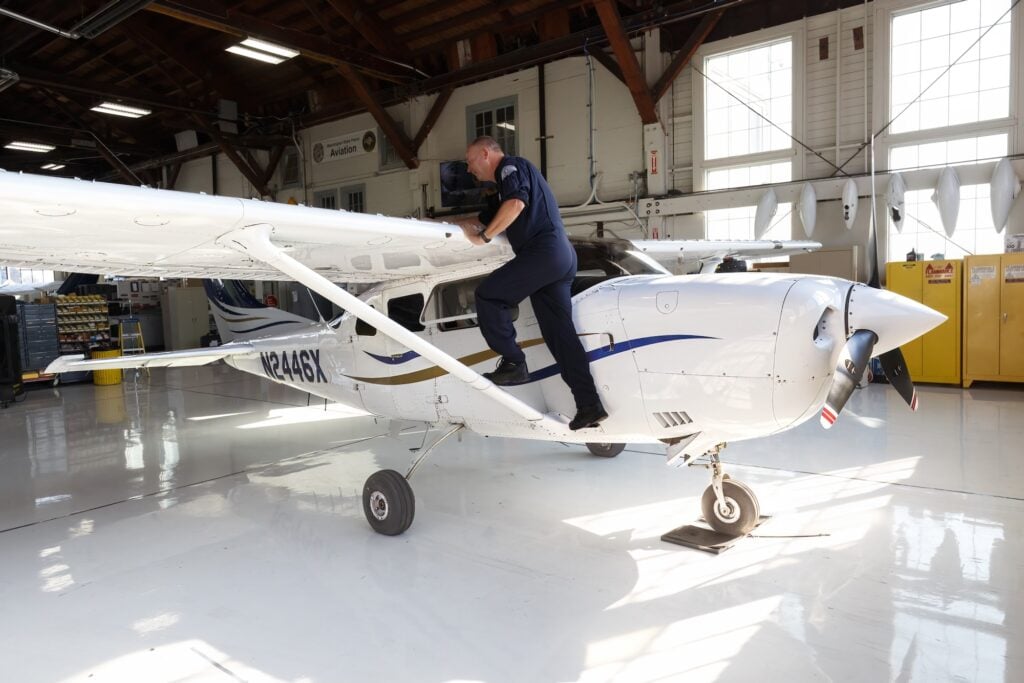
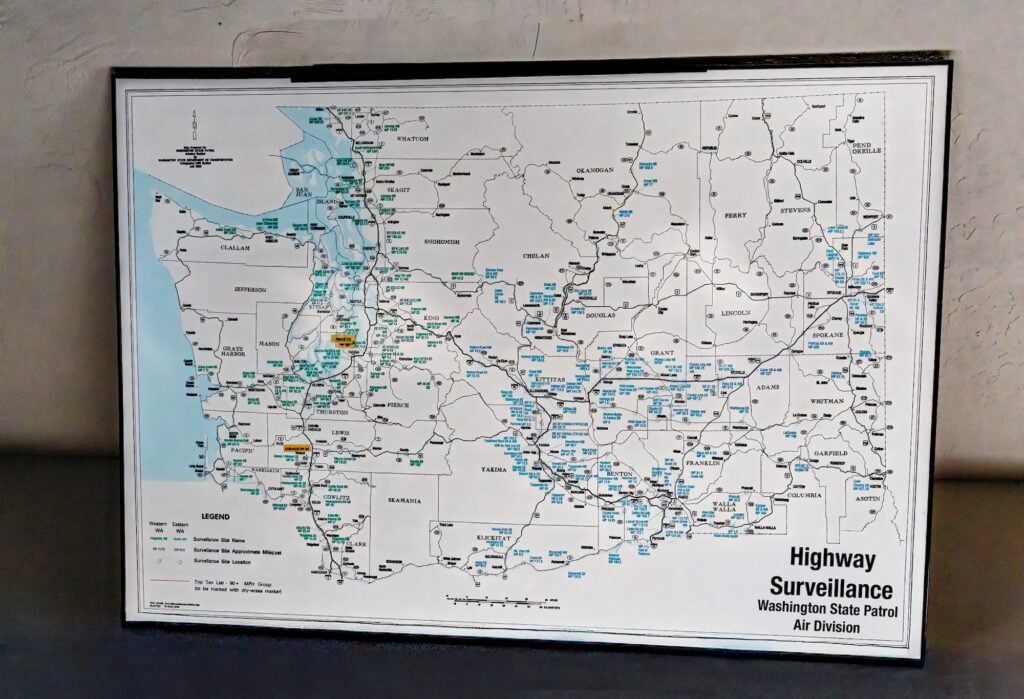
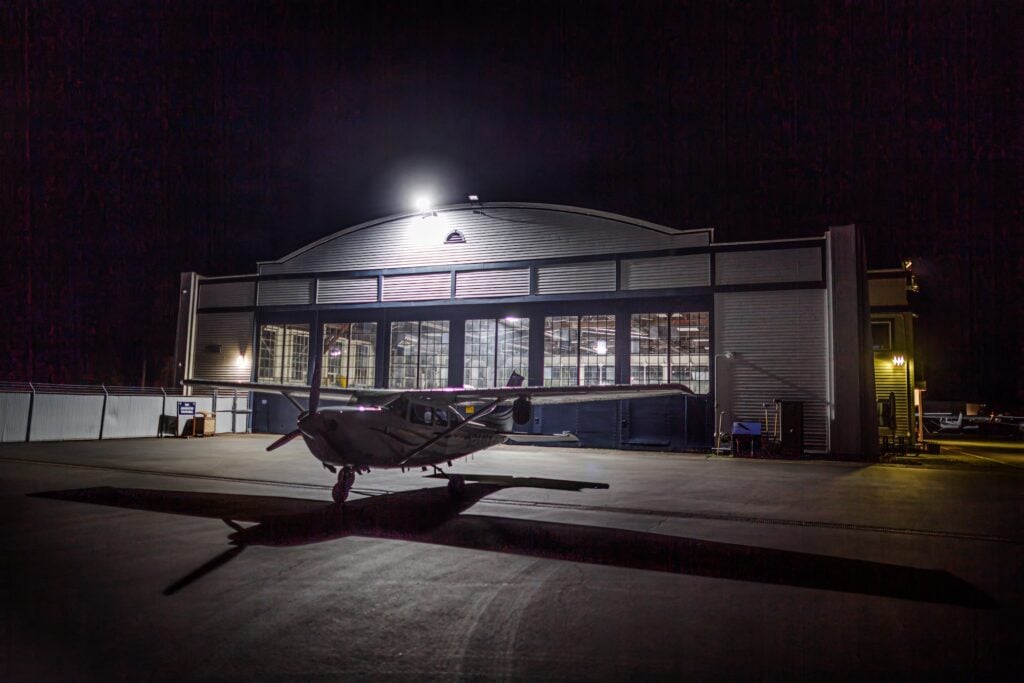
Cessna 206H Stationair (“Smokey 3”): The undisputed, heavy-breathing workhorse for night patrols. Known across the radio frequencies by its distinct call sign, Smokey 3, these planes serve as the literal foundation for TZAP (Target Zero Aerial Patrol)—an aggressive initiative that evolved out of historical DUI enforcement grants. Cruising at 3,000 feet in absolute darkness, crews concentrate their orbits where calls for service spike, predominantly hugging the heavy concrete corridors of I-5 from Olympia up through the bottlenecks of Everett.
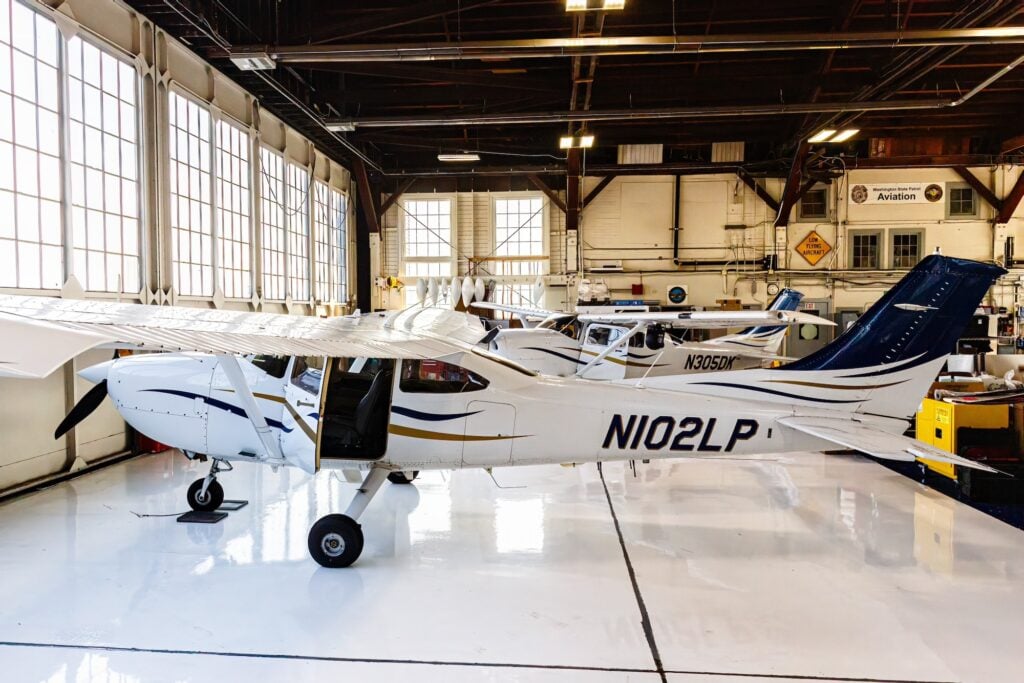
Cessna 182 (“Lane”): The daylight enforcer. Configured primarily for daytime speed enforcement, these aircraft utilize precision stopwatches paired with calibrated tick-marks painted directly onto the asphalt far below. The 182 also doubles as an administrative shuttle, frequently carrying agency leadership, including the WSP Chief, across state lines.
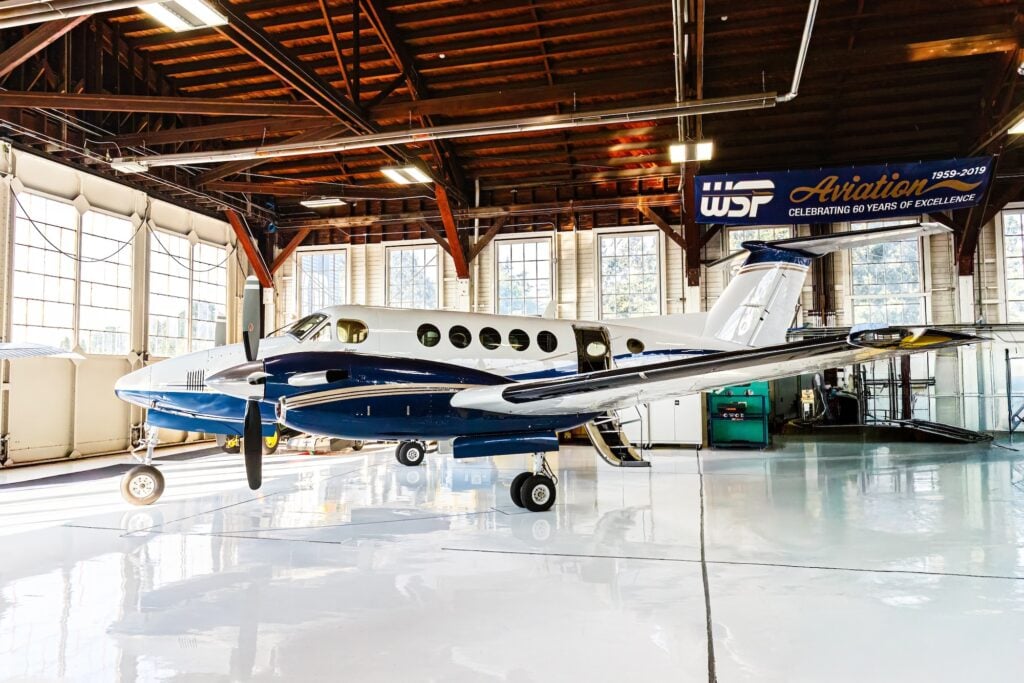
King Air 200: The twin-pilot, seven-passenger turboprop that acts as the state government’s executive air lifeline. Under a rigorous state charter framework, the King Air quietly whisks away the Governor, gubernatorial staff, corrections officials, and key state administrators when ground transit is untenable.
Despite the sophistication of the fleet, the sky remains an utterly indifferent master. Weather is the ultimate arbiter of every shift. Summer wildfire smoke chokes visibility down to zero; winter brings freezing fog and structural icing; autumn winds turn the Puget Sound convergence zones into violent washing machines.
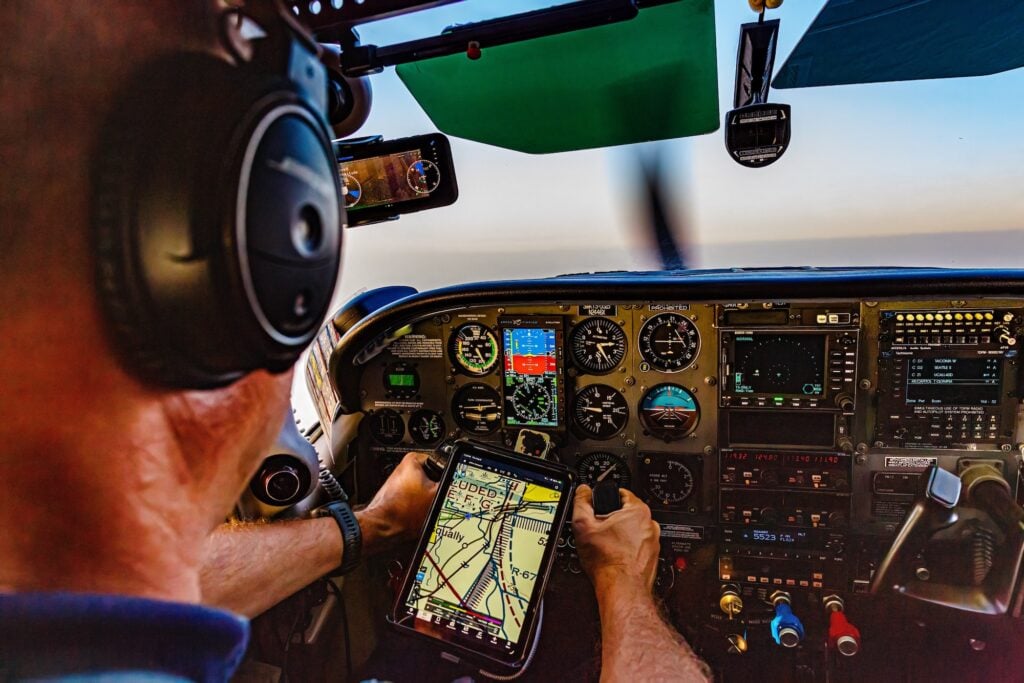
“Every single night we make a determination based on the weather whether we’re even going to fly,” Maupin says, gesturing toward the instrument panel. “And there are a lot of nights we don’t fly just because of weather.”
Chapter IV: The Ballet of the Intercept:
When a target vehicle finally locks into the thermal crosshairs and speeds push past the hundred-mile-per-hour mark, the mission shifts instantly from surveillance to high-velocity choreography. The TFO in the back and the pilot up front must lock into a silent, flawless feedback loop, coordinating simultaneously with WSDOT Incident Response units, King County deputies, Tacoma patrol cars, and municipal departments.
“The TFO does a lot of the directing,” Maupin explains. “If we are tracking a vehicle, they will direct me which way to maneuver the airplane to keep the camera locked on target.”
Jones breaks down the micro-timing of an intercept with the precision of an air traffic controller: “I try to rely on the pilot a lot more than the map because they’re looking out the window seeing up ahead. I’ll tell the pilot, ‘Okay, we’re coming up, we’re about a half a mile from the trooper… quarter of a mile… tell the trooper to start rolling.’ Once the ground unit is behind the car, we confirm whether it’s the right vehicle or if we need to reset and try again.”
The single greatest hazard in high-altitude tracking isn’t mechanical failure or weather; it is human cognitive collapse known as tunnel vision. During extended pursuits—such as a frantic vehicle chase winding from the industrial sprawl of Everett down into the dark residential arteries of Seattle—suspects routinely bail out, abandoning their cars to run on foot through unfamiliar backyards and pitch-black ravines.
If a TFO makes the fatal mistake of staying zoomed in too tightly on the exact patch of brush where a suspect vanished, they lose situational awareness of the surrounding street grids. The entire escape route opens up behind them.
“You have to remember to zoom out,” Jones emphasizes from the rear cabin, tapping his console. “So you can see around where they’re going to scoot out.”
Conclusion: The Exhausting, Exhilarating Finish:
As the eastern horizon begins to pale over the Cascade foothills and Smokey 3 greases its landing back onto the tarmac in Olympia at 3:00 AM, the physical reality of the shift sets in. Operating a cramped, freezing cockpit while juggling thermal feeds, radio traffic, FAA clearances, and high-speed pursuits drains every reserve of focus.
Yet, for officers like Maupin in the left seat and Jones working the back-seat systems, the bone-deep fatigue is permanently eclipsed by the sheer singularity of the work. Unlike the predictable grind of standard road patrol, the sky offers an unscripted, shifting canvas every single night—a front-row seat to a silent drama shared with local municipal agencies who rarely get the luxury of an eye in the clouds.
For anyone staring down from an office window at a world illuminated solely by taillights and headlights, stepping up into the dark reveals a quiet, unyielding truth: behind every dashcam video on the evening news, behind every felony stop on a darkened shoulder, there is an invisible guardian watching from above, ensuring that no matter how fast the night moves, justice ultimately finds its way home.
Photos
Click arrows or swipe images to view slideshow:
Photos © 2026 David Rosen/SlickPix Photography