
Story & Photos by David Rosen
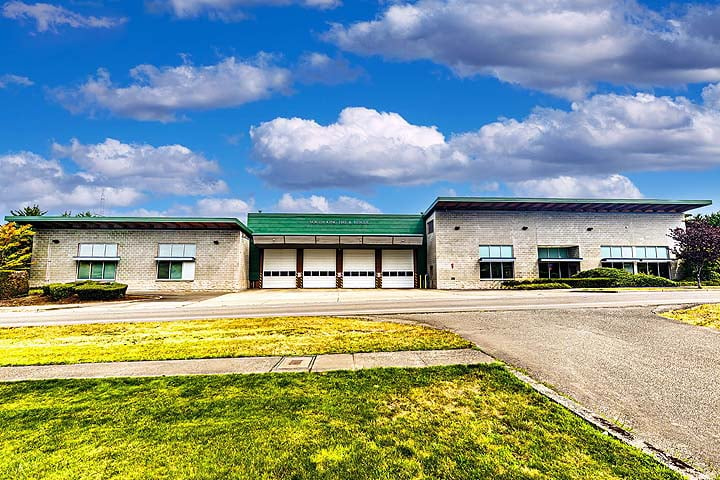
Step inside the apparatus bay of South King Fire Station #367 in Des Moines, Washington, and the first thing that hits you is the pristine, operational readiness of the place. The faint scent of polished concrete mixes with the sharp, mechanical tang of diesel and ozone. This isn’t just a neighborhood firehouse; this is a tactical hub where multi-agency coordination is executed flawlessly every single day.
When the bay doors roll up, you are looking at a masterclass in modern emergency fleet profiles, split perfectly between mastering the pavement and dominating the unpredictable chop of the Puget Sound. The alarm hasn’t dropped yet, but the pulse of Station 367 is already beating.
The Pavement: Precision and Power:
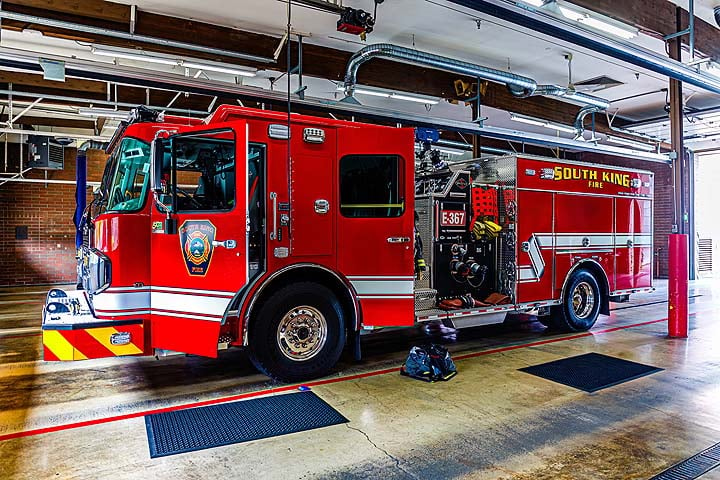
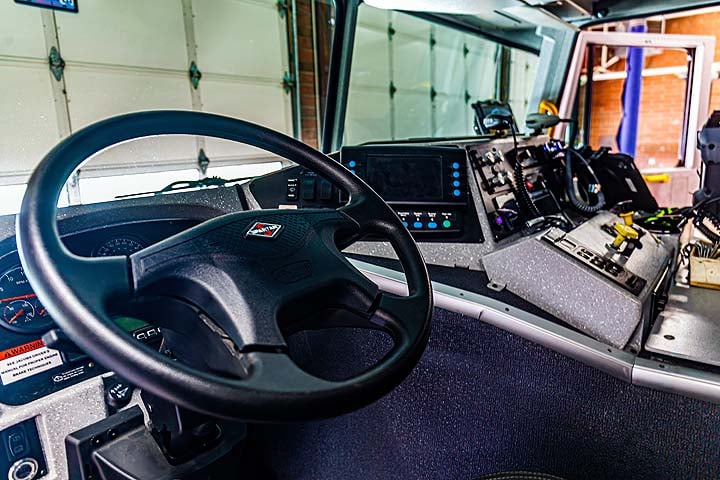
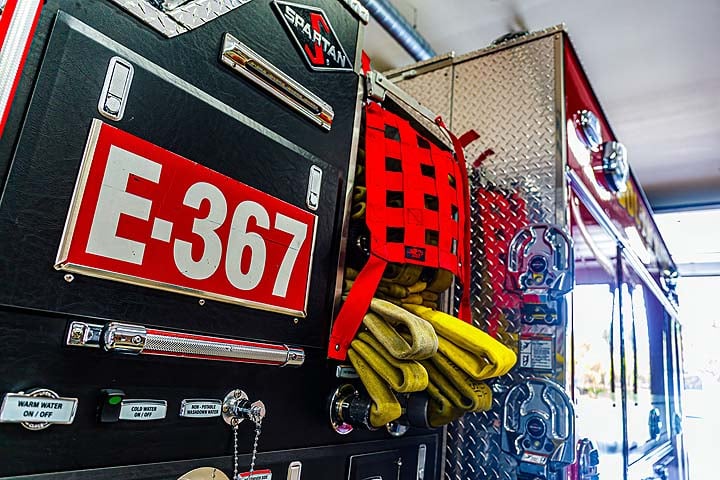
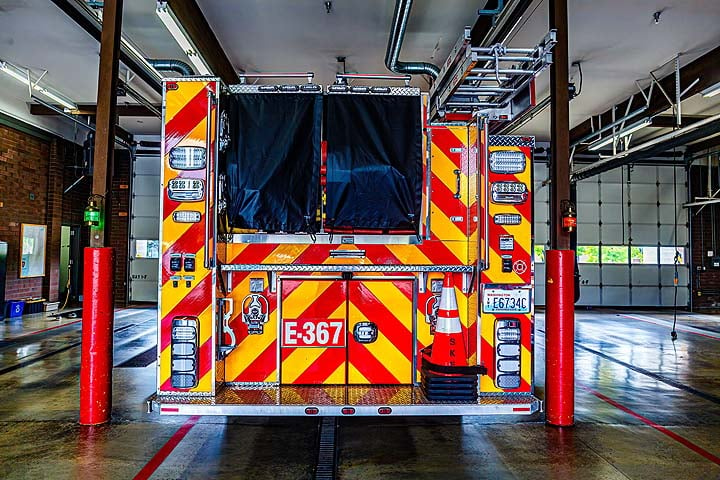
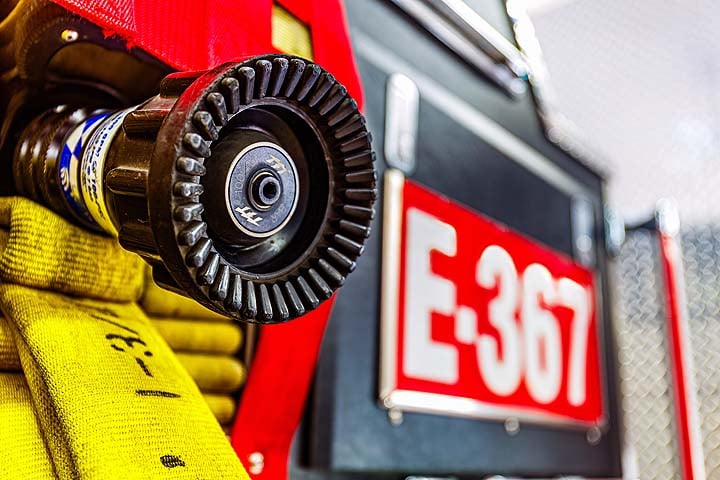
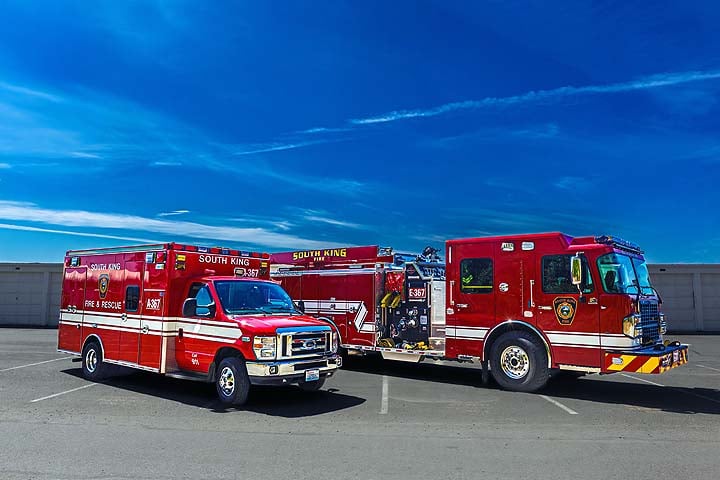
Walk down the line, and the crown jewel of the ground fleet commands immediate attention: Engine 367 (E-367). This custom-built heavy workhorse is practically fresh from the factory. With barely 5,000 miles on the odometer, the chrome gleams flawlessly under the overhead lights, and it still carries that distinct smell of fresh rubber and pristine metal. When the tones drop for a structure fire or heavy rescue, this is the beast that roars to life, its massive diesel engine echoing off the block walls.
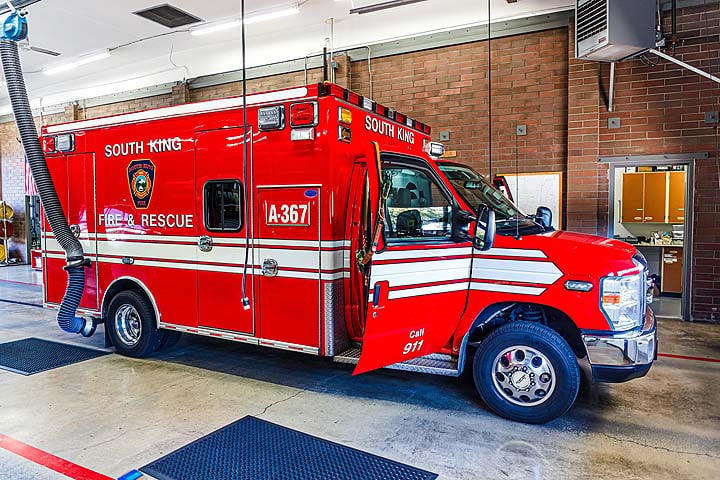
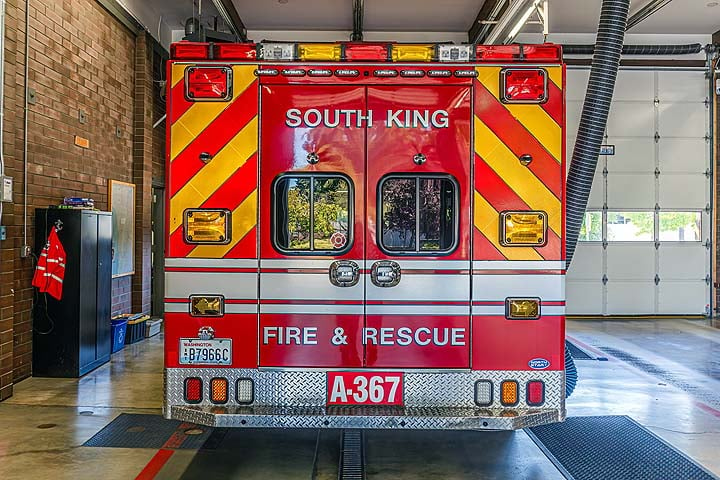
Just a few bays down sits Aid 367 (A-367). While E-367 brings the heavy water and extraction gear, A-367 is the high-tempo lifeline of the station, engineered for rapid deployment to handle the relentless, daily volume of medical emergencies across the district.
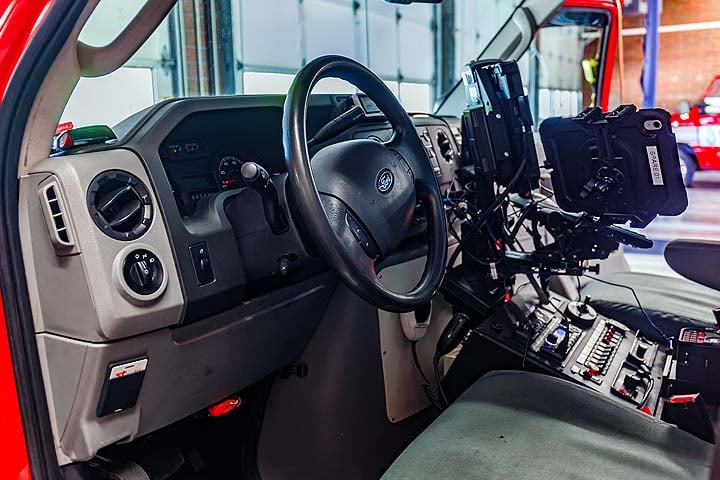
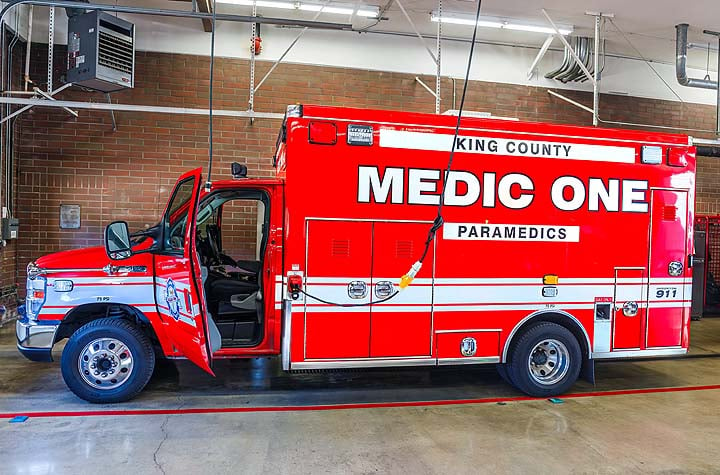
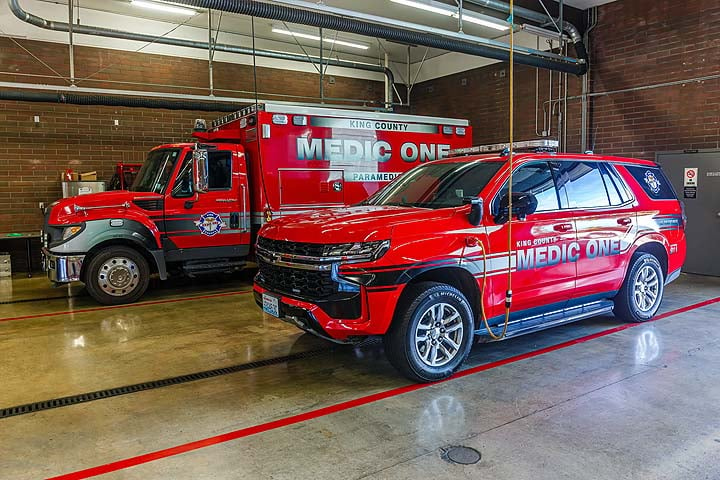
But Station 367’s ground game doesn’t stop with South King Fire. Tied into the same shorelines, waiting side-by-side, are the elite assets of King County Medic One. The massive, heavy-duty Medic One apparatus brings advanced life support and rolling emergency room capabilities directly to the curb. Flanking it is the agile, rapid-response Medic One SUV, allowing supervisors and paramedics to cut through Des Moines traffic and arrive on scene seconds ahead of the heavy rigs to begin triage.
0745: The Pavement Choreography:
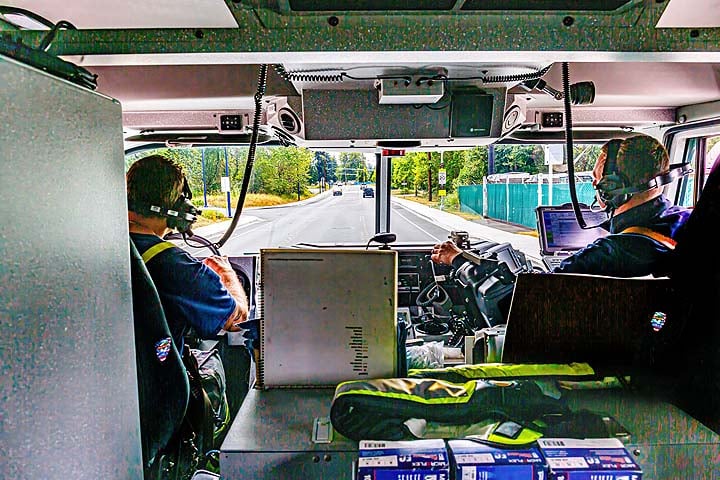
Step into the bay around 0745 hours, and you will see the King County Medic One crews already deep into their morning checks. Working around the heavy-duty Medic apparatus, they demonstrate the quiet intensity of seasoned professionals. Every cardiac monitor, every trauma kit, and every airway bag is inventoried with surgical precision.
Their day-to-day training goes far beyond advanced life support—it is a continuous masterclass in high-stakes de-escalation and flawless multi-agency coordination. When a critical call drops, Medic One paramedics and South King Fire crews will converge on a chaotic scene simultaneously. In the bay, they run through rapid-fire tabletop scenarios and equipment familiarization, syncing their communication protocols. They know that when they hit the asphalt, there is no time to figure out who is doing what. There is no hesitation, only action.
The Water: Fireboat ZENITH:
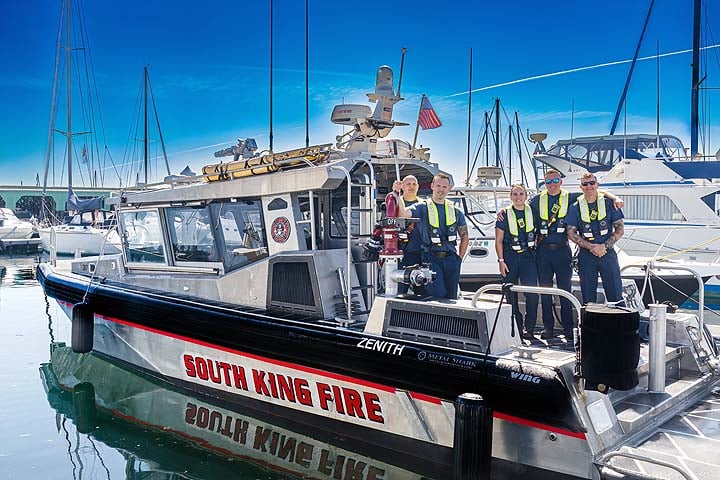
When the emergency moves off the asphalt and onto the water, the mission shifts down to the Des Moines Marina. Here, bobbing against the dock, is a $1.3 million maritime powerhouse: Fireboat ZENITH.
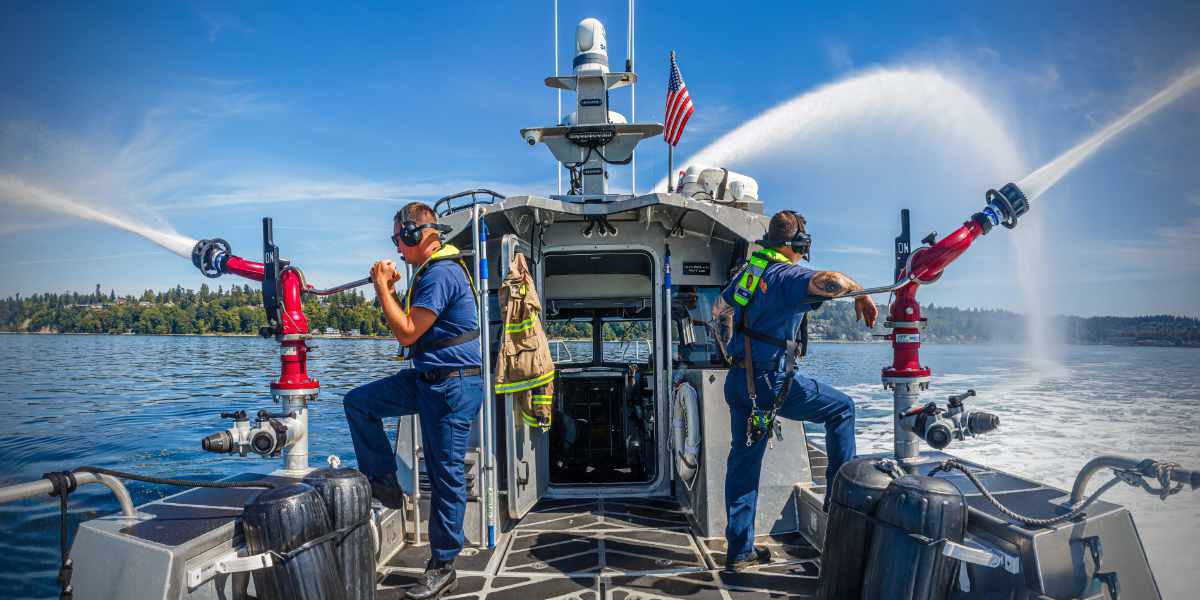
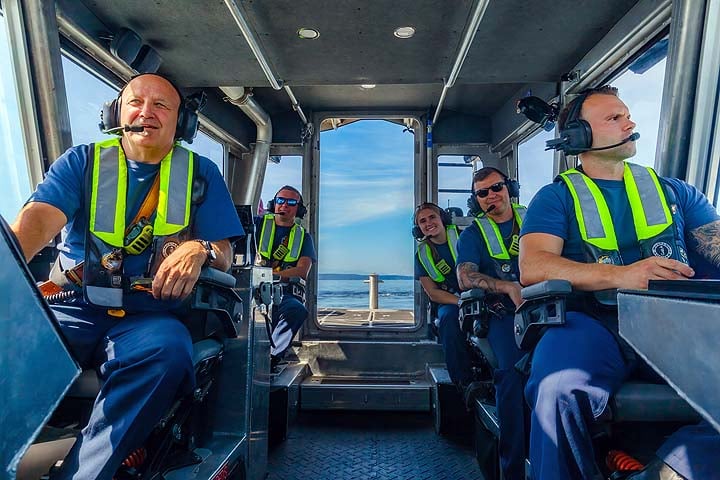
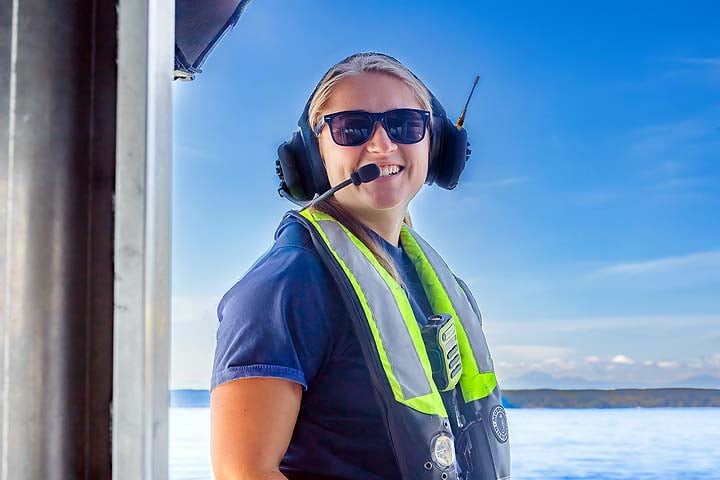
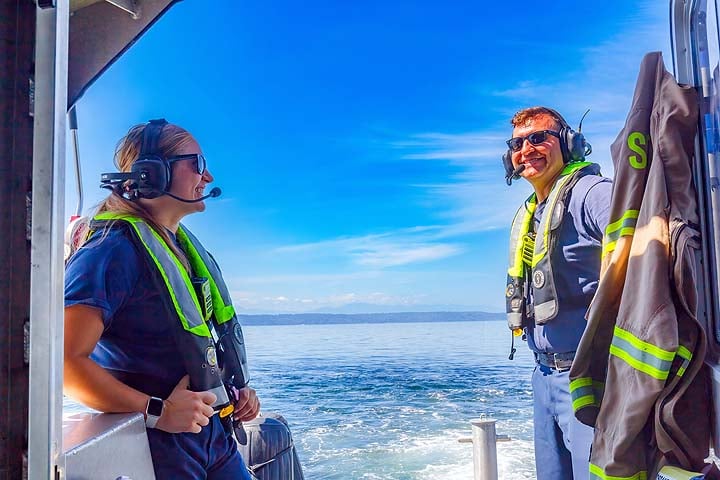
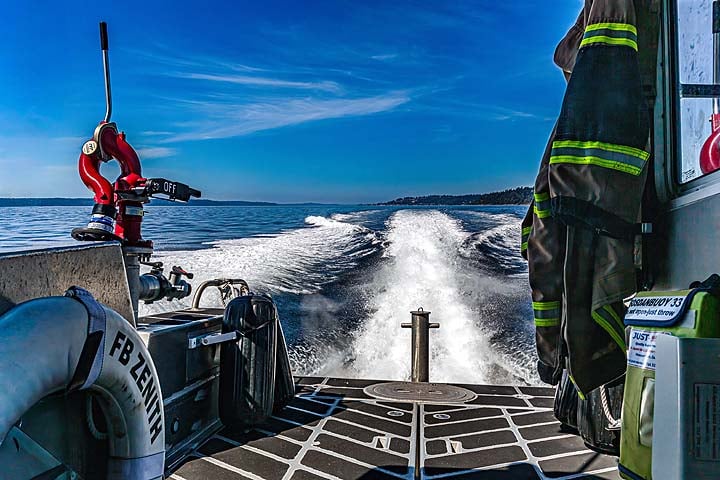
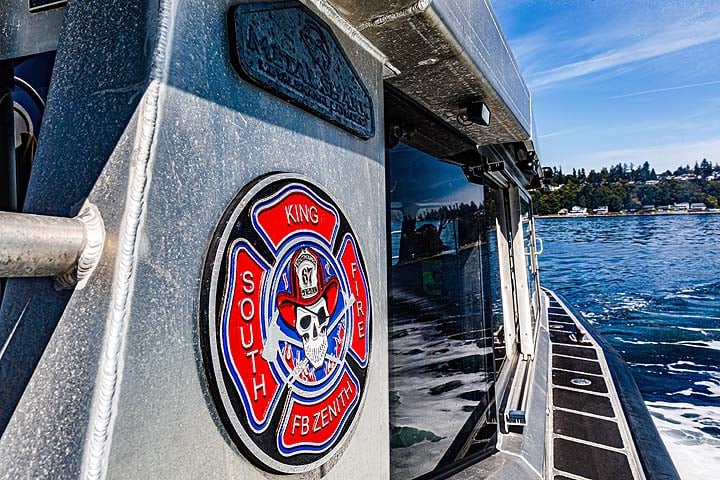
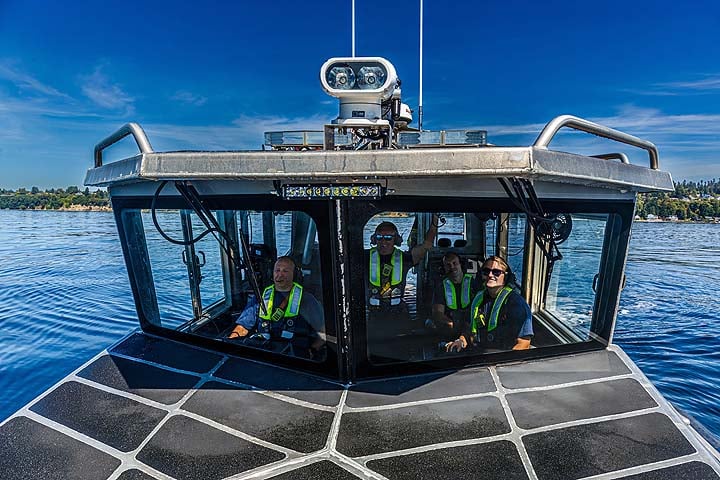
Step aboard the 44-foot Metal Shark vessel, and you immediately feel the hum of absolute capability. Seeing the Marine Team crew geared up in their survival suits on the aft deck, you understand the sheer scale of their responsibility. They aren’t just protecting a marina—they are the primary rescue and suppression force for a massive swath of the Puget Sound stretching from Burien to Tacoma and across to Vashon Island.
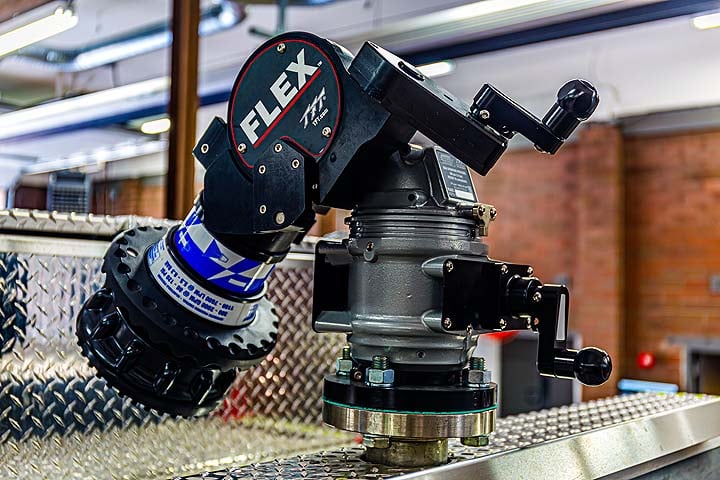
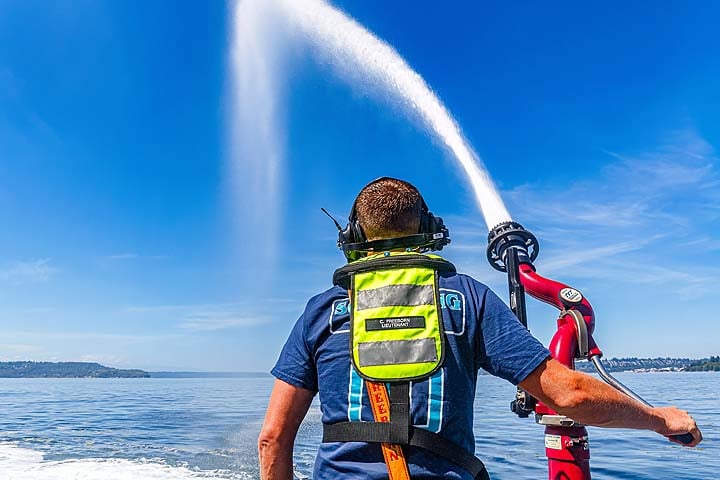
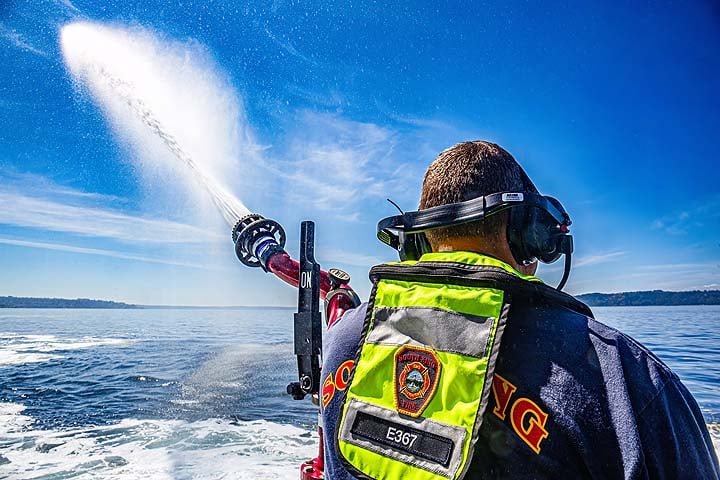
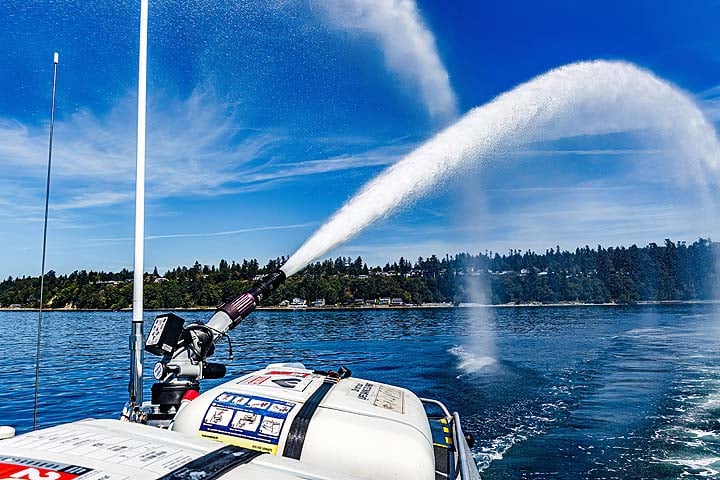
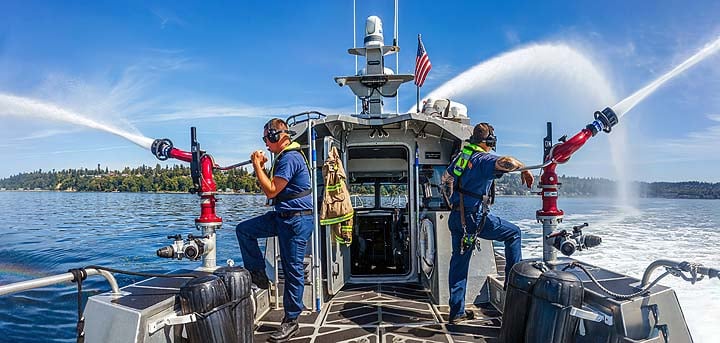
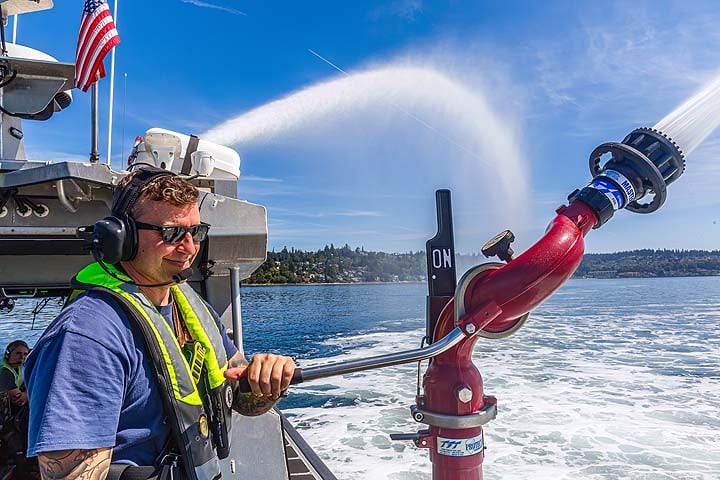
If a commercial vessel catches fire or a shoreline structure goes up in flames, ZENITH doesn’t just arrive; it overwhelms. Its massive pumps can draft and blast 3,000 gallons of water per minute through its monitors, turning the ocean itself into an endless fire hydrant. Whether they are pulling a stranded paddleboarder from freezing currents before the Coast Guard can arrive, or throttling up to punch through heavy sea-state chop to reach a submerged vehicle, ZENITH and its crew represent the ultimate tip of the spear in maritime response.
0930: Saltwater and Survival Suits:
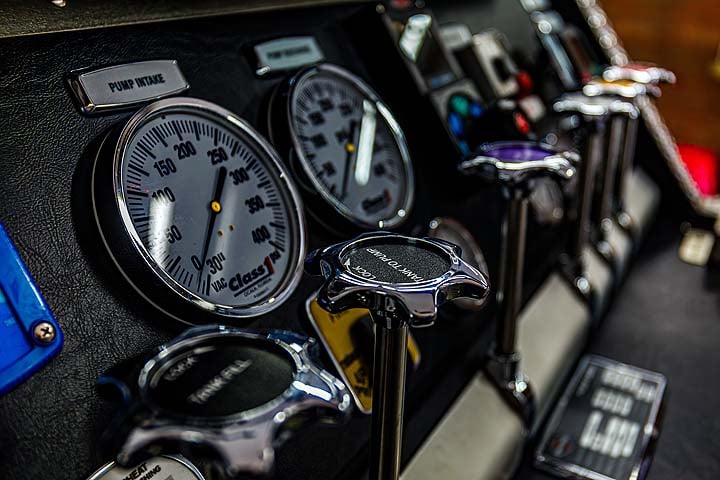
While the ground crews run pump-pressure drills on E-367, the Marine Team heads down the hill to the marina. The morning fog is still burning off the Puget Sound as they step onto the diamond-plate deck of Fireboat ZENITH.
Training out here is visceral. It starts with the survival suits. The crew races the clock to don their bulky, insulated cold-water gear, knowing that if they are thrown into the frigid Pacific currents during a winter squall, those heavy suits are the only thing keeping them alive.
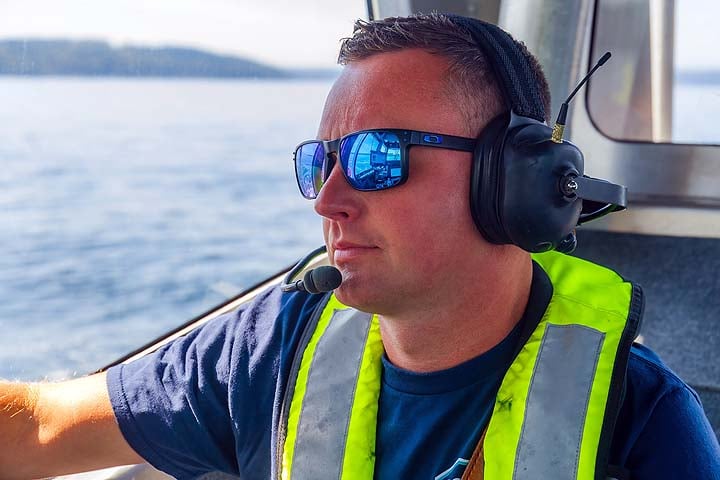
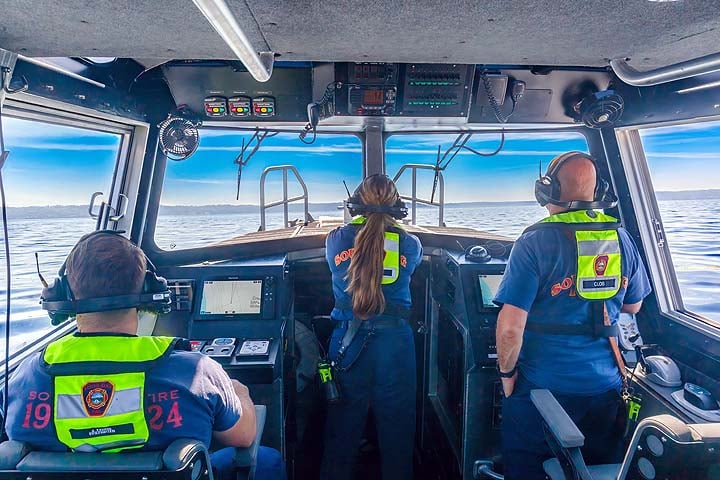
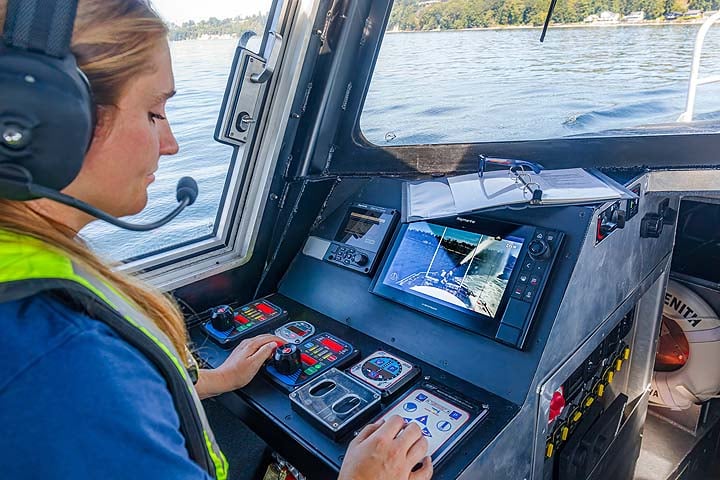
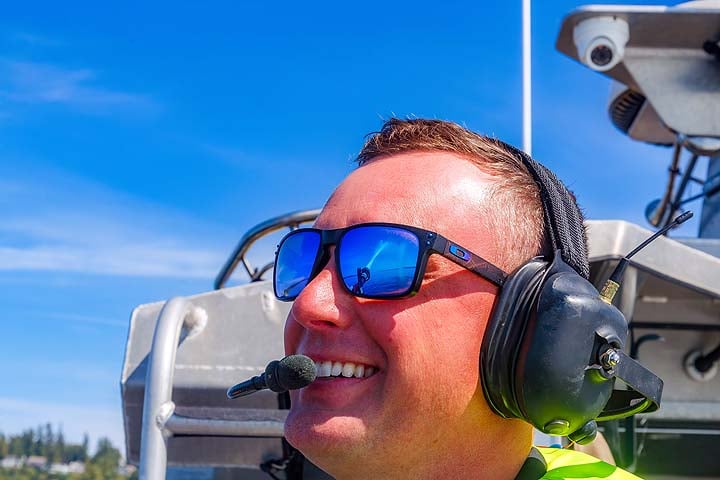
Then, the twin diesels roar to life. You can feel the heavy vibration in your chest as the captain throttles ZENITH out past the breakwater. Today’s drill is high-capacity drafting and precision maneuvering. The crew positions the vessel against the unpredictable chop and engages the massive pumps. Suddenly, 3,000 gallons of saltwater per minute erupt from the deck monitors, blasting a heavy, white arc across the gray sky. The crew practices balancing the thrust of the engines against the massive recoil of the water cannons, keeping the boat locked perfectly in position just as they would if they were fighting a blazing three-story structure fire on the shoreline.
1400: The State of Readiness:
By mid-afternoon, the intense adrenaline of the morning drills settles into the focused calm of the watch. Back at the station, boots are polished, reports are drafted, and crews study tactical maps of the rapidly changing district. The radios crackle with quiet, routine updates from dispatch.
Whether they are prepping for a medical crisis on a crowded Des Moines street, or a mayday call from a sinking vessel out past Vashon Island, the crews of Station 367 exist in a permanent state of coiled readiness.
The heavy apparatuses are clean. The medical bags are packed. The sea is waiting.
And then…
the station tones drop.
Off they go.
Photos
Click arrows or swipe images to view slideshow:

Credit: David Rosen Credit: David Rosen Credit: David Rosen Credit: David Rosen Credit: David Rosen Credit: David Rosen Credit: David Rosen Credit: David Rosen Credit: David Rosen Credit: David Rosen Credit: David Rosen Credit: David Rosen Credit: David Rosen Credit: David Rosen Credit: David Rosen Credit: David Rosen Credit: David Rosen Credit: David Rosen Credit: David Rosen Credit: David Rosen Credit: David Rosen Credit: David Rosen Credit: David Rosen Credit: David Rosen Credit: David Rosen Credit: David Rosen Credit: David Rosen Credit: David Rosen Credit: David Rosen Credit: David Rosen Credit: David Rosen Credit: David Rosen Credit: David Rosen

Photos © 2026 David Rosen/SlickPix Photography