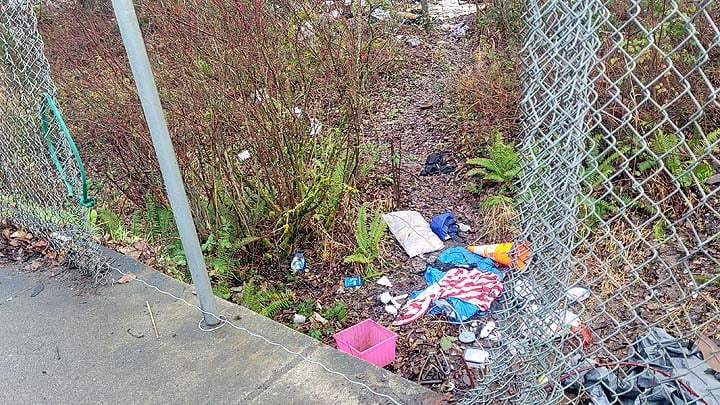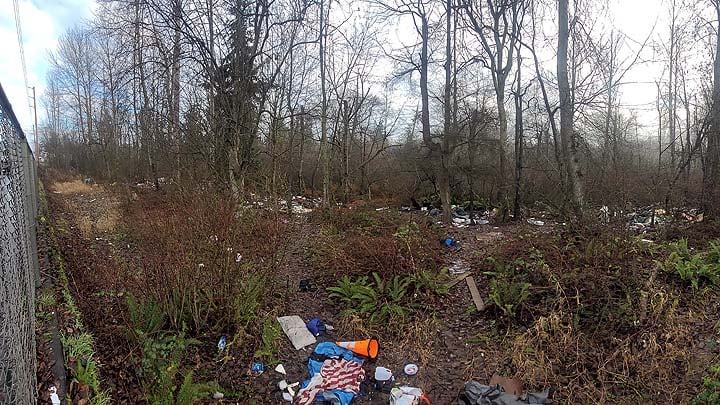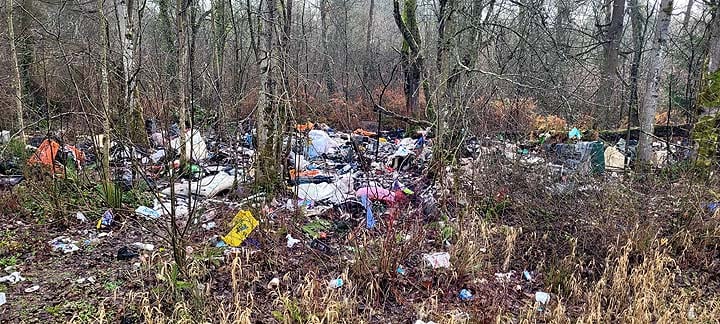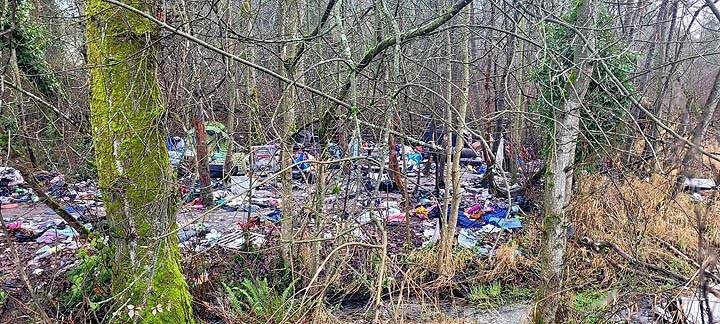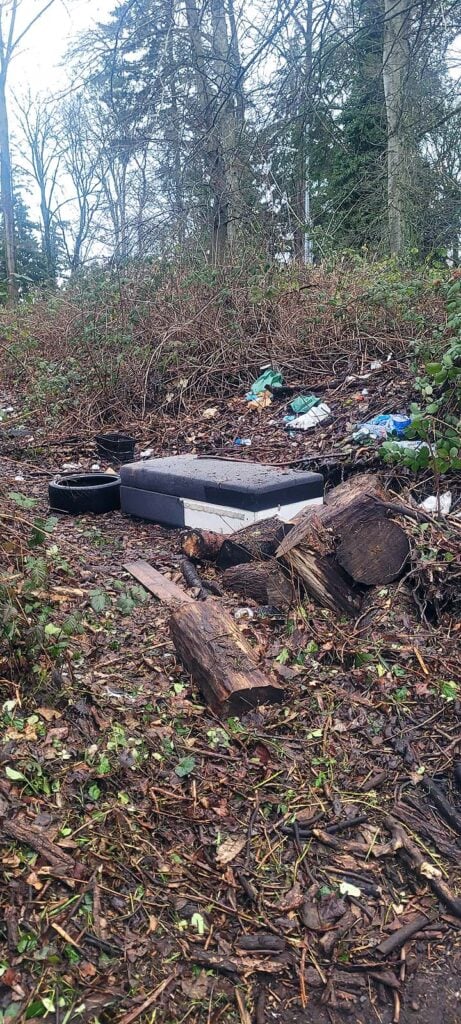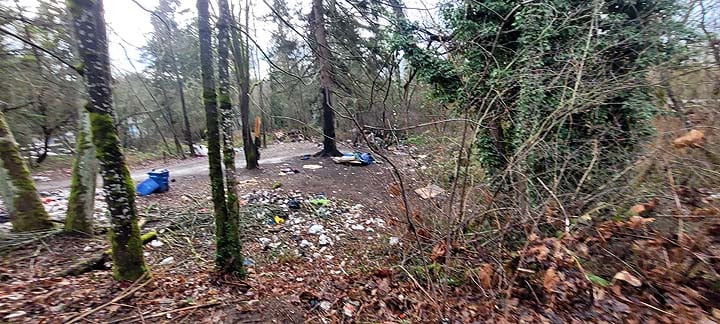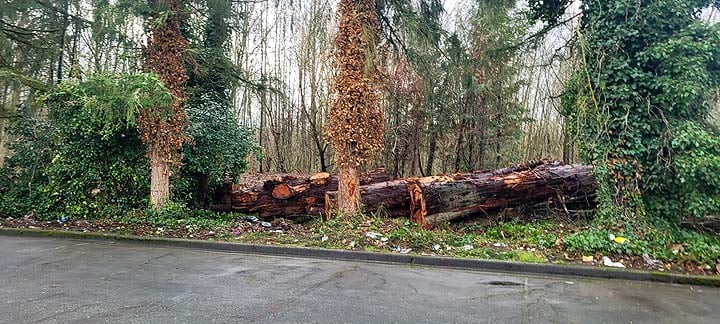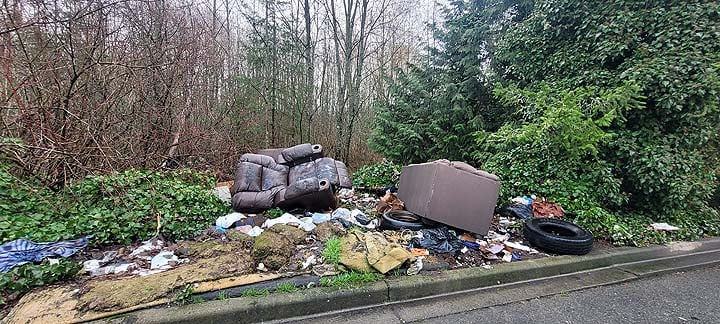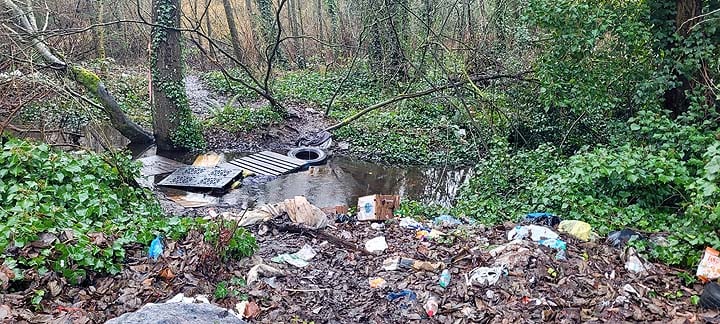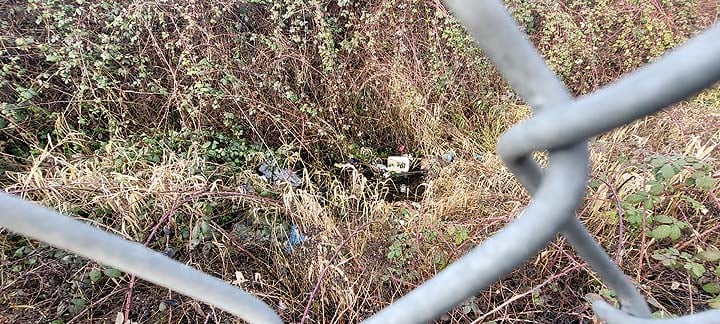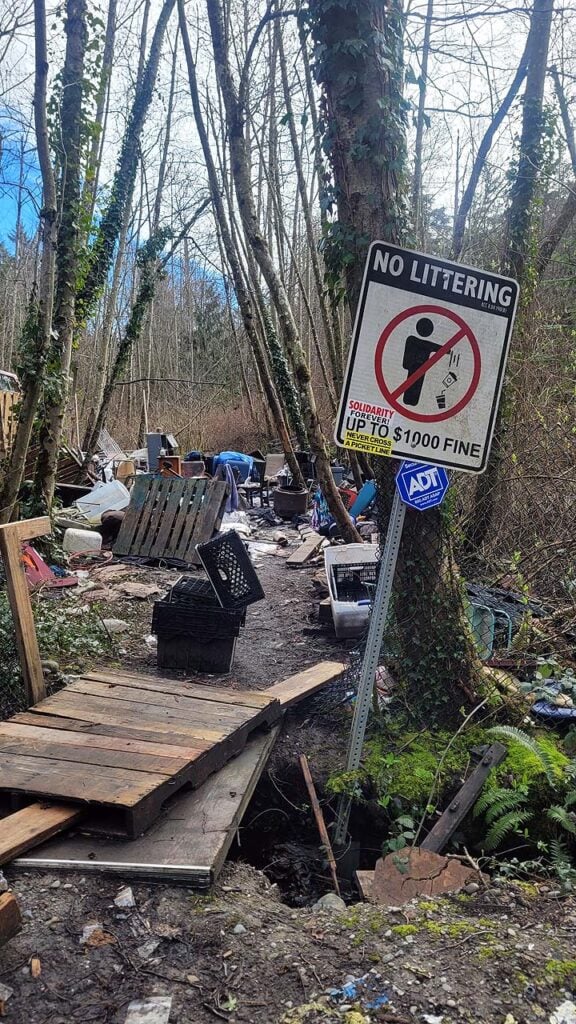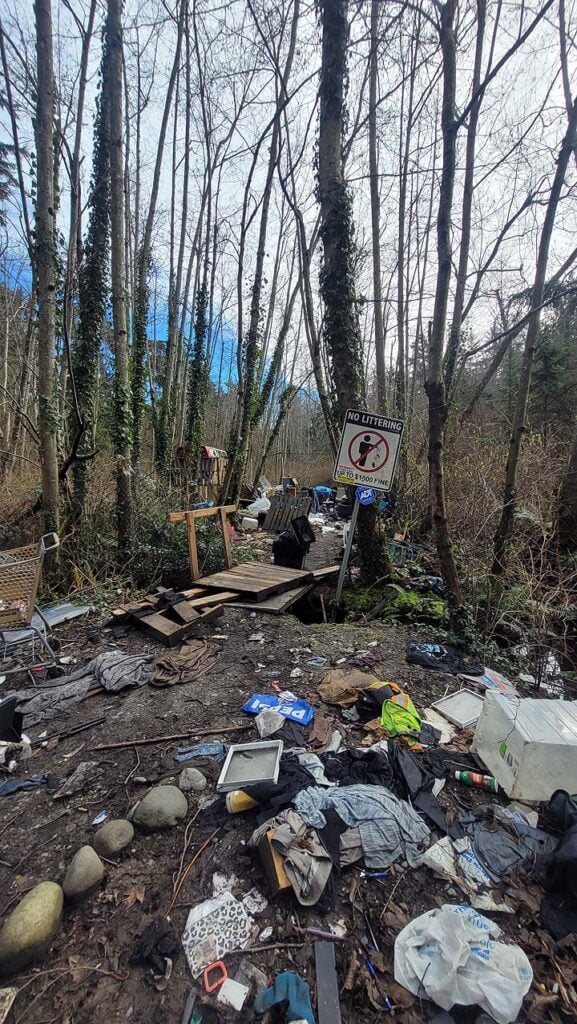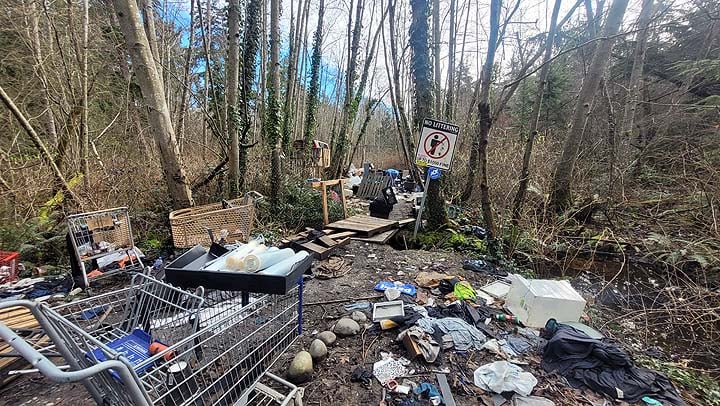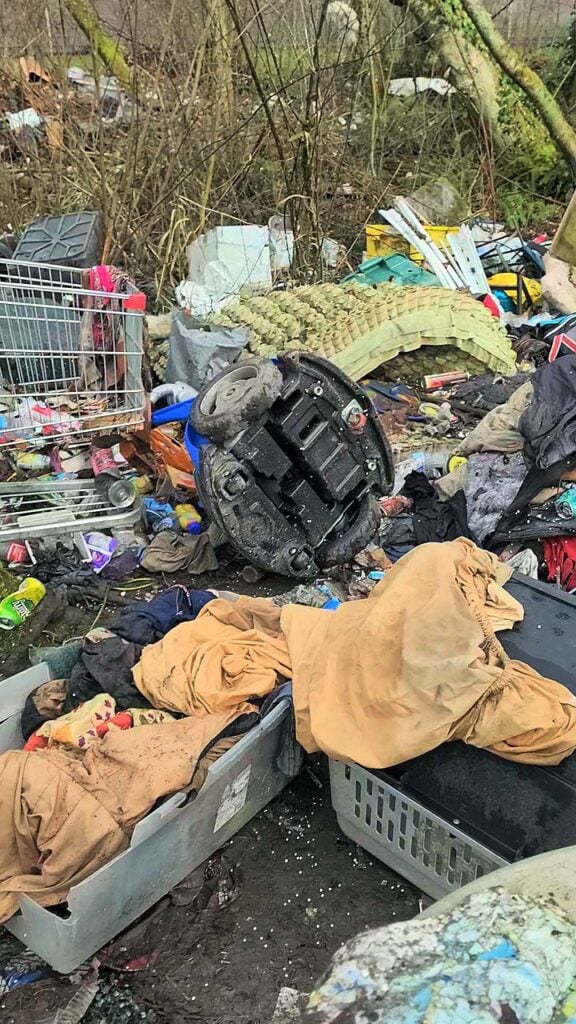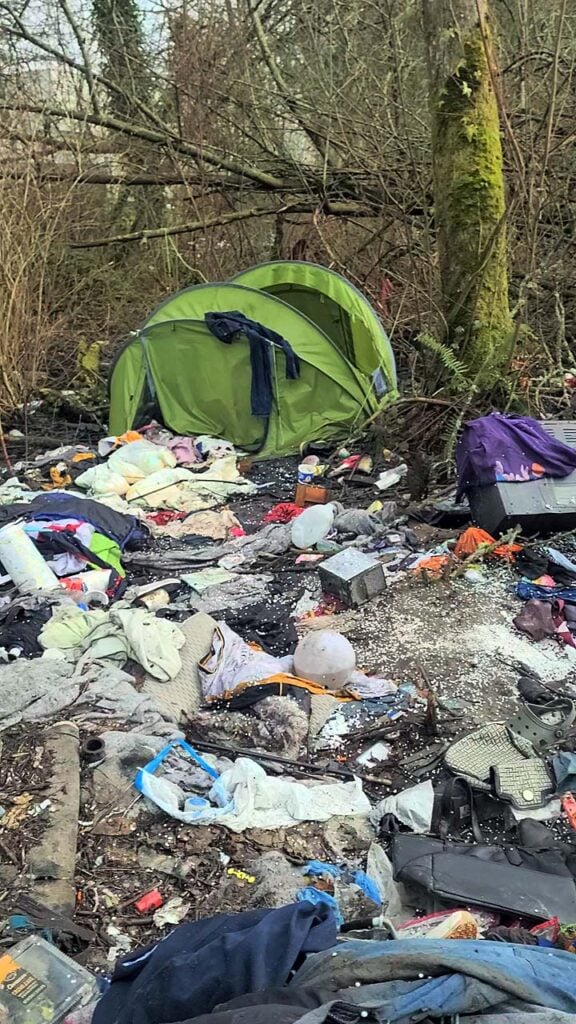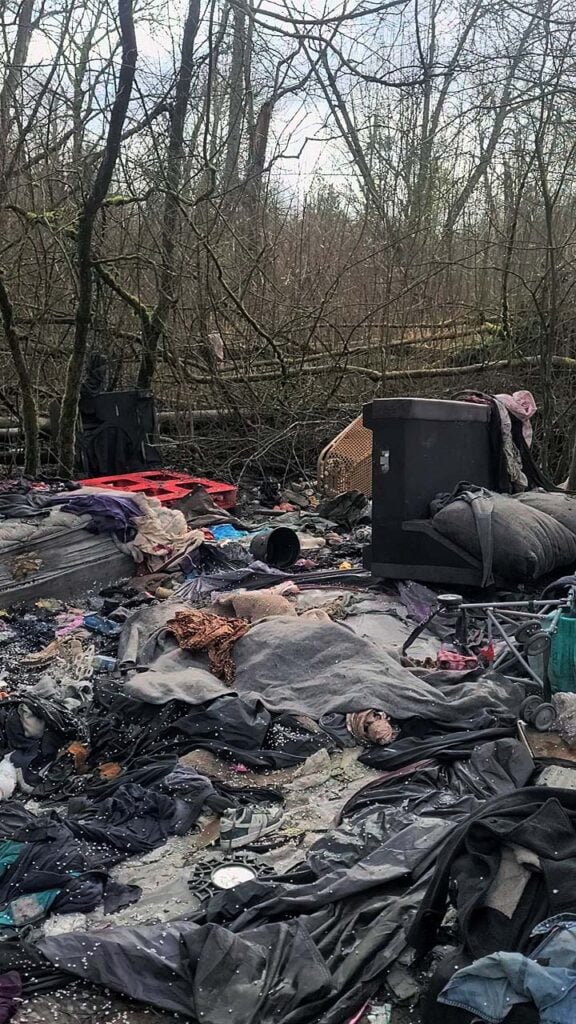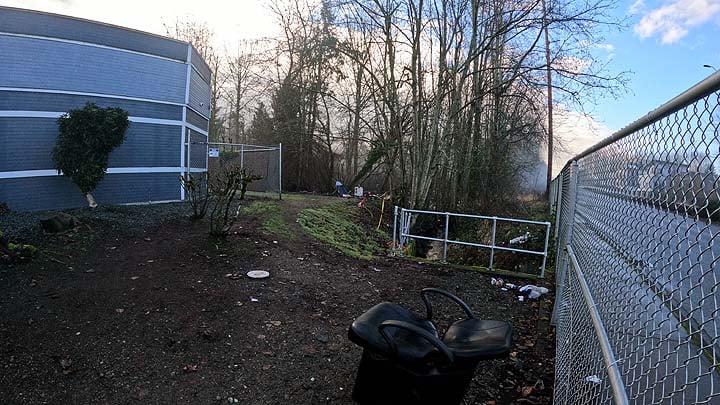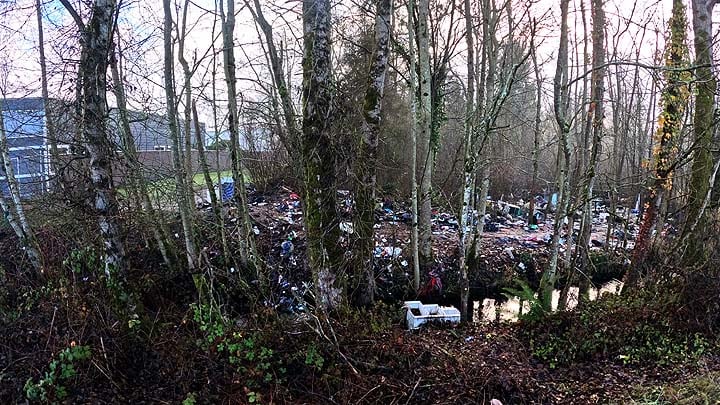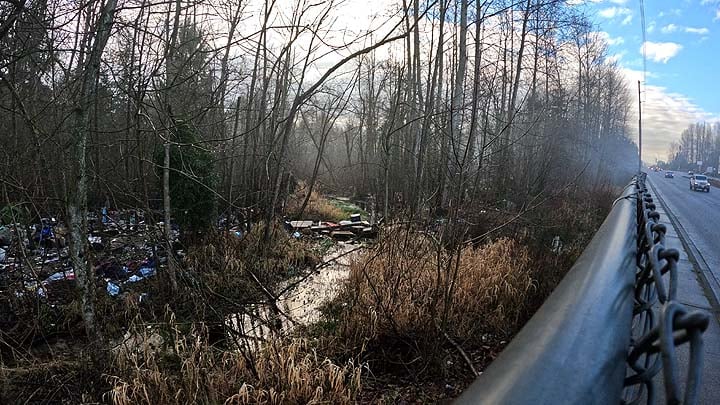

A Des Moines diver is raising concerns about widespread pollution and dumping in the Woodmont Wetlands, an environmentally-sensitive area that borders Kent and Des Moines and feeds into Puget Sound at Saltwater State Park.
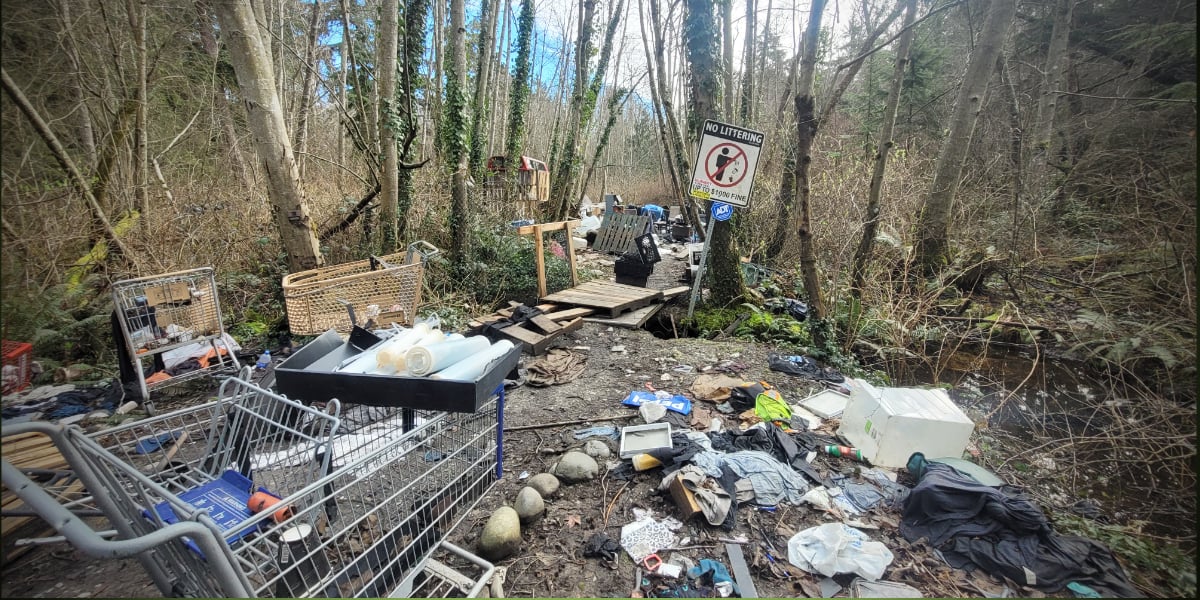
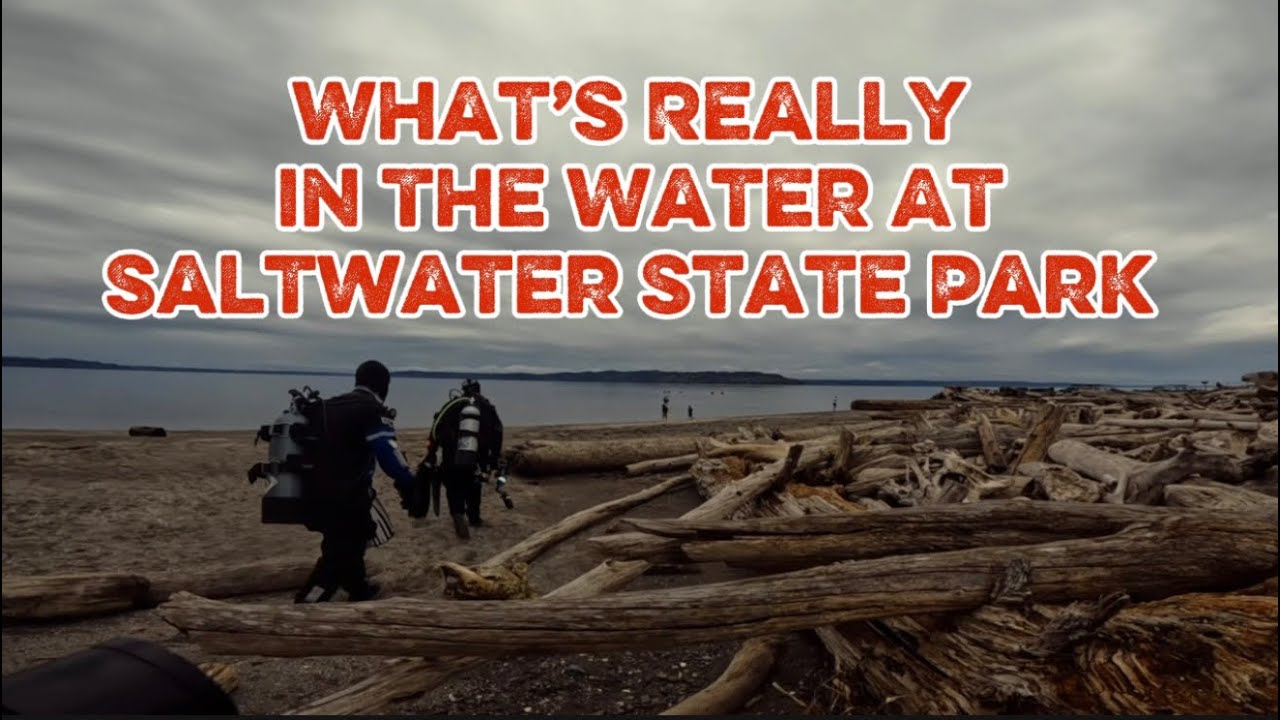
Mark Hitchcock documented conditions in the wetland in a video (see below) and described the area as heavily impacted by trash and debris, calling it “just littered, dumping ground.”
The Woodmont Wetlands serve as a water source for McSorley Creek, a salmon spawning creek that flows into Puget Sound. Hitchcock noted the wetland typically plays a key role in filtering and purifying stormwater, but said its condition appears to be deteriorating, with signs of environmental stress including dying trees.
“This area has always been kind of prone to a lot of dumping,” Hitchcock said.
According to Hitchcock’s observations, the site contains scattered debris including shopping carts, strollers, copper wire and other trash. He said efforts to limit access, such as placing barriers to prevent carts from entering the area, have not stopped dumping, noting that carts and debris remain visible throughout the wetland.
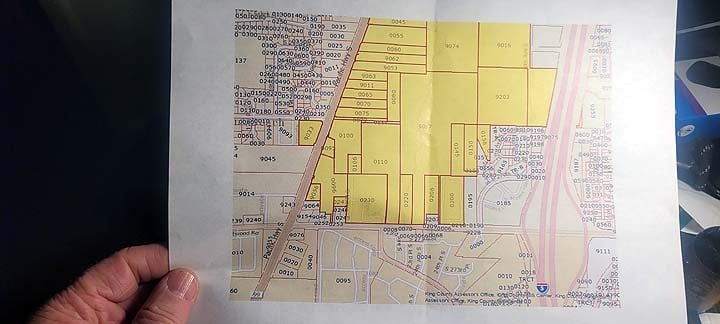
Hitchcock also described the area as fragmented across multiple parcels with unclear ownership, complicating cleanup and oversight efforts. He said the condition of the site has worsened over time, adding, “It’s gotten into such horrible condition with the trash.”
The wetland provides habitat for wildlife and supplies water to McSorley Creek, which has long been posted with warnings advising visitors to avoid contact due to water quality concerns.
Hitchcock said the scope of the pollution appears to exceed what volunteers alone can solve, and that protecting the area has proven challenging for agencies at the city, county and state levels.
He suggests the area could be reimagined as a public park, with trails and bridges allowing access for walkers, bicyclists and limited off-road vehicle use.
“The solution that I think needs to happen is that the county or state needs to become the steward of the land,” Hitchcock said. “It’s a green space that shouldn’t be privately owned, or if it is, the owners should be held responsible for maintaining it so that it doesn’t affect the area’s natural resources.”
“There could be an area for a homeless camp, but there needs to be sanitation services,” he added.
Video
Photos
Click arrows or swipe images to view slideshow of photos courtesy Hitchcock: